If you've been asking yourself, "What is lead nurturing?", this post aims to answer that question definitively. The lead nurturing meaning is simpler than the jargon around it. Lead nurturing is the process of building relationships with potential customers who aren't ready to buy yet, using relevant content and timely follow-up to guide them toward a purchase decision.
IBM defines lead nurturing as building relationships with leads through relevant resources and personalized content that guide them through the sales funnel.
A form fill tells you someone is curious. It doesn't tell you they're ready for a sales call, and the space between those two moments is where a lot of good leads end up going cold.
This guide gives you a working lead nurturing definition, shows how the process runs, separates it from lead scoring and drip campaigns, and walks through two real examples.
Key Takeaways
- Definition: Lead nurturing is the process of building relationships with potential customers who aren't ready to buy yet, guiding them toward a purchase through relevant content and timely follow-up.
- Opportunity lift: B2B marketers with successful nurturing programs reported an average 20% increase in sales opportunities from nurtured leads, per a Demand Gen Report poll.
- More touchpoints to cover: McKinsey's 2024 B2B Pulse Survey found B2B buyers use an average of ten interaction channels across the buying journey, double the five they used in 2016.
- Cuts CRM costs: An enterprise SaaS company used Pinpointe to nurture trade show leads and pass only highly engaged contacts to HubSpot, saving the cost of expensive seats for unengaged leads.
- Scales abandoned follow-up: 21st Mortgage Corporation, managing more than 450,000 contacts, ran automated nurture sequences for incomplete loan applications that drove 2.5 million emails a year.
In this guide
What Lead Nurturing Means for a B2B Team
Strip away the funnel diagrams and the lead nurturing meaning comes down to one job. You stay useful to a prospect until they're ready to decide, so your company is the obvious choice when that day comes.
A working lead nurturing definition
Oracle describes lead nurturing as the process of cultivating leads that are not yet ready to buy. That framing sets the audience for every message you send. You're writing for people who raised a hand but haven't made up their minds.
Oracle also flags a common mistake. Plenty of marketers think of nurturing as nothing more than email, when it works better as a planned series of communications across channels.
Where nurturing sits in the sales funnel
Lead nurturing picks up after lead generation. IBM places it right after capture, the point where sales and marketing teams need to engage, educate, and guide new leads toward becoming customers.
Shopify maps the process to four stages, awareness, interest, consideration, and action, and keeps nurturing going after the purchase to build loyalty.
For a definition, the core is the stretch before the purchase. Post-sale follow-up borrows the same mechanics, but its audience is customers. For the full stage breakdown, see our guide to lifecycle email marketing.

Why Lead Nurturing Matters for Your Pipeline
Plenty of the leads you capture aren't ready to buy yet. Nurturing is how you stay in the conversation during that gap, so you aren't starting from zero when they are.
Nurturing can lift sales opportunities
In a Demand Gen Report poll of B2B marketers, companies that had successfully deployed lead nurturing programs reported an average 20% increase in sales opportunities from nurtured leads. It's an older, self-reported poll, so treat the number as directional. What it points to is upside from leads already sitting in your database, which is where nurturing earns its keep.
Buyers move across more channels than they used to
McKinsey's 2024 B2B Pulse Survey found B2B buyers use an average of ten interaction channels across the buying journey, double the five they used in 2016. One follow-up email is a thin thread against that many touchpoints. Nurturing gives you a reason to show up more than once, with something worth reading each time.
Sending every lead to sales gets expensive
An enterprise SaaS company ran into this with a backlog of trade show leads. The team used Pinpointe to nurture those contacts with webinars and newsletters, tracked their clicks, and passed only highly engaged leads to sales in HubSpot. That saved the cost of expensive HubSpot seats for contacts who weren't engaging.
Nurturing did double duty there. It warmed the leads worth warming and kept the rest out of the most expensive tool in the stack.
How Lead Nurturing Works
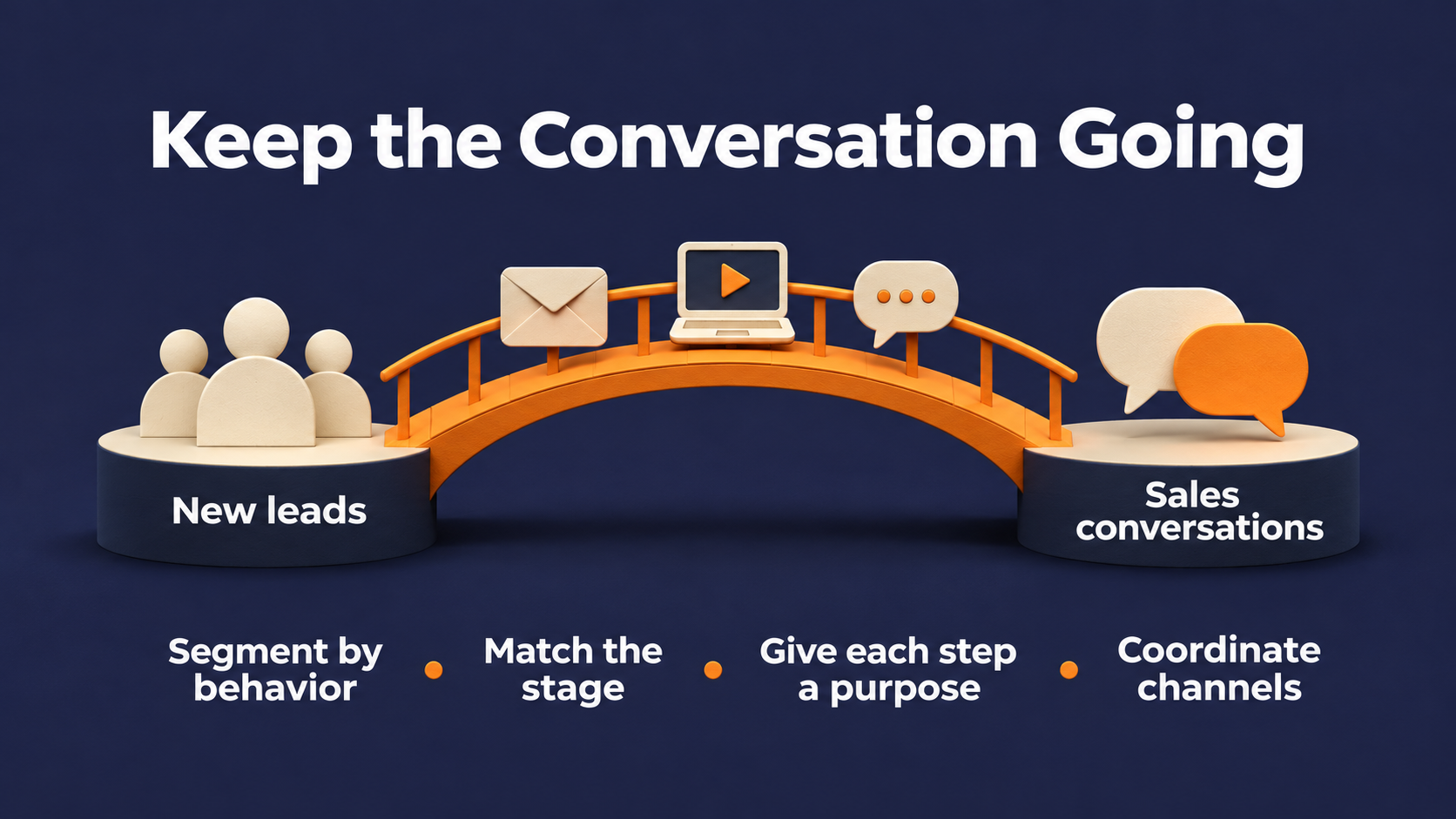
Every nurture program, simple or elaborate, runs on the same few moving parts. IBM lists segmentation, customer tracking, lead scoring, and marketing automation as key components that work alongside each other.
Segment by who the lead is and what they did
Group leads by shared traits and behavior before you write a word. An operations director who downloaded a pricing guide and a student who skimmed one blog post should not get the same follow-up.
If you want a deeper framework for building out segments and sequences, our guide to lead nurturing strategy walks through it step-by-step.
Match the message to the stage
An early-stage lead needs help understanding the problem. A decision-stage lead needs proof that your approach works. Building content for each stage, as Shopify's framework lays out, keeps every message relevant to where the reader sits.
Plan each step with a clear objective
Oracle's advice is to treat nurturing as a workflow where every step has a defined purpose, whether that's moving someone to the next stage or prompting a specific action. If you can't say what a message is supposed to accomplish, it probably doesn't belong in the sequence.
Use more than one channel
Email does the heavy lifting, but it shouldn't carry the whole load. Shopify recommends combining email with SMS, retargeting ads, live chat, social posts, and LinkedIn messages to reach leads where they already spend time. For more insight on this, check out our post on using email marketing and SMS marketing together.
It also helps when those channels share what they know about the lead. Coordinating lead data across channels keeps your follow-up in context, so your retargeting reflects what someone did in your emails instead of greeting them like a stranger.
How Lead Nurturing Differs From Related Terms
Three neighboring terms get mixed up with lead nurturing all the time. Each one relates to it in a different way.
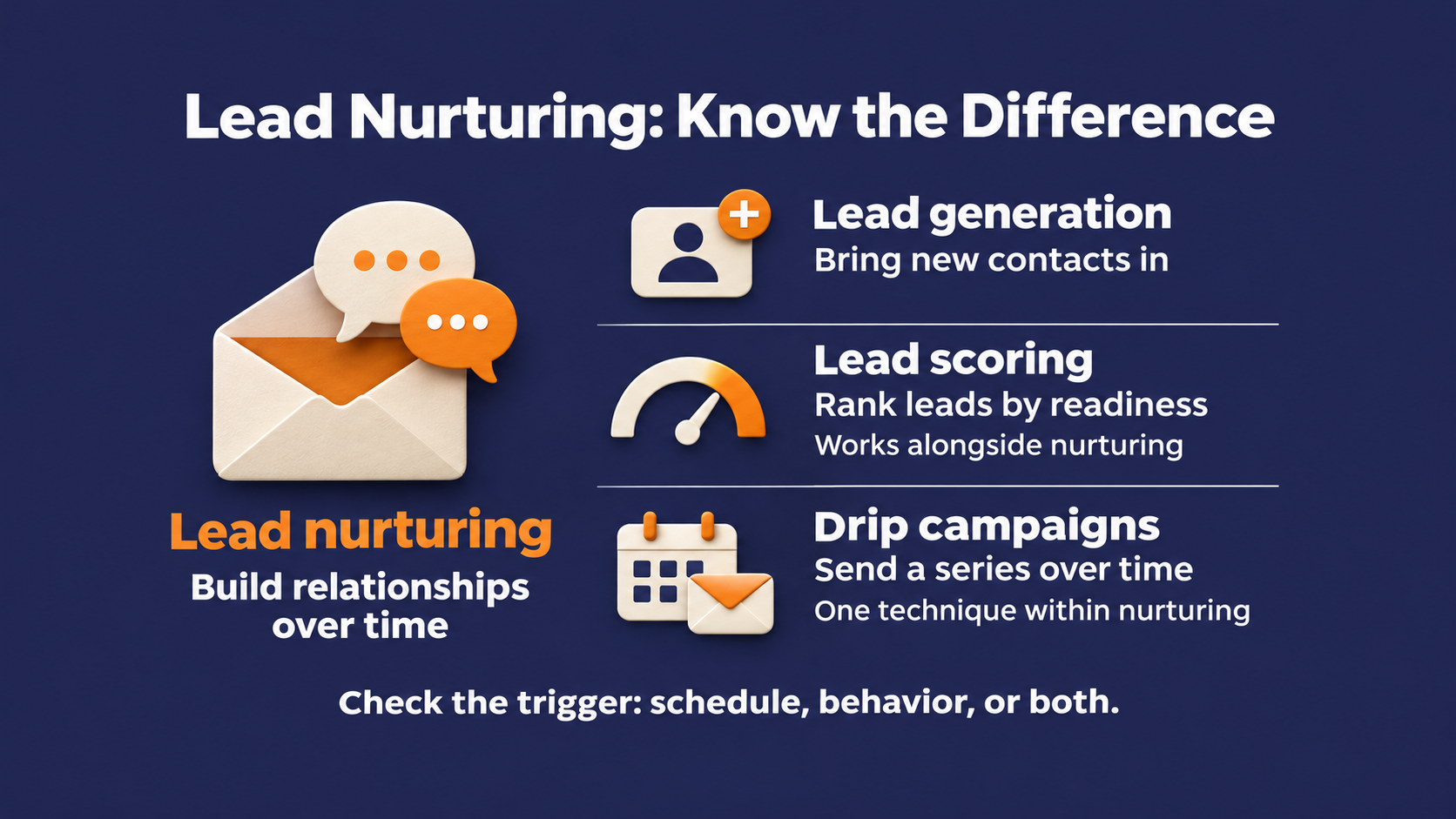
Lead nurturing vs lead generation
Lead generation brings new contacts in. Lead nurturing develops the relationship with contacts you already have, which is why IBM describes nurturing as the step that follows generation. If generation is the piece you need to shore up first, see our rundown of lead generation emails that actually fill a pipeline.
Lead nurturing vs lead scoring
IBM defines lead scoring as a ranking system that assigns each lead a numerical value based on predetermined characteristics and behaviors, so sales can focus on the most promising prospects. Scoring tells you who looks ready. Nurturing is the ongoing work that moves people toward readiness.
The two run side by side rather than one after the other. Scoring prioritizes leads by sales readiness, nurturing keeps them engaged over time, and you can run both at once. For a closer look at building a model, see our guide to email lead scoring.
Lead nurturing vs. a drip campaign
A drip campaign is a series of messages sent on a schedule, and it usually works as one technique inside a nurture program. Nurture programs tend to mix timing with behavior. Oracle's guidance is to enter contacts into automated sequences where either an action or a date stamp triggers the process.
The labels overlap in practice, too. Shopify uses "automated drip campaigns" for email sequences that respond to behavior, like someone abandoning a cart. So focus on the trigger more than the name.
A sequence that sends the same messages on the same calendar no matter what a lead does will miss the moment someone opens three of your emails in a row. For the mechanics of building one, see our guide to a drip email campaign that converts.
A Lead Nurturing Example From a Lender
Definitions land faster with a real program behind them. 21st Mortgage Corporation, a wholesale manufactured home lender managing more than 450,000 contacts across several sister companies, used Pinpointe to follow up with homebuyers who start a loan application and don't finish it.
When a homebuyer stops partway through, an automated sequence picks up the conversation. Those campaigns drove 2.5 million emails a year and helped the company close more loans.
The people in this sequence are consumer homebuyers, not business buyers, but the same basic trigger-and-follow-up pattern can apply in B2B. For example, when the stalled step might be a demo request or a quote form someone abandoned halfway.
Three things make this lead nurturing in the full sense. A specific behavior starts it, the audience is narrow and close to a decision, and the sequence is designed to help the buyer finish what they started. For more on how this kind of sequence gets built and when it pays off, see our breakdown of lead nurturing automation.
Turning the Lead Nurturing Definition Into a Working Program
Lead nurturing means staying useful to prospects until they're ready to decide. In practice, that comes down to segmenting leads, matching content to their stage, giving every step a clear objective, and showing up across more than one channel. It follows lead generation, runs alongside lead scoring, and treats drips as one tool among several.
If you capture leads, you probably already have the content to nurture them. Where it breaks down is the moment a lead does something meaningful, and nothing happens next.
Visual multi-step flows, dynamic segments, and instant CRM sync
In Pinpointe, that follow-through runs on Journeys, our visual builder for automated, multi-step email and SMS flows. Contacts enter or advance when they join a list, submit a form, open an email, or click a link, and conditional branching sends different leads down different paths. Dynamic segments update automatically as behavior and data change, so the right leads land in the right path without anyone rebuilding lists by hand.
Once a lead is ready, a configured integration through our API, webhooks, or Zapier can pass them to your CRM. Sales sees the contacts worth a conversation, and the rest keep getting nurtured.
Find where your nurture program leaks
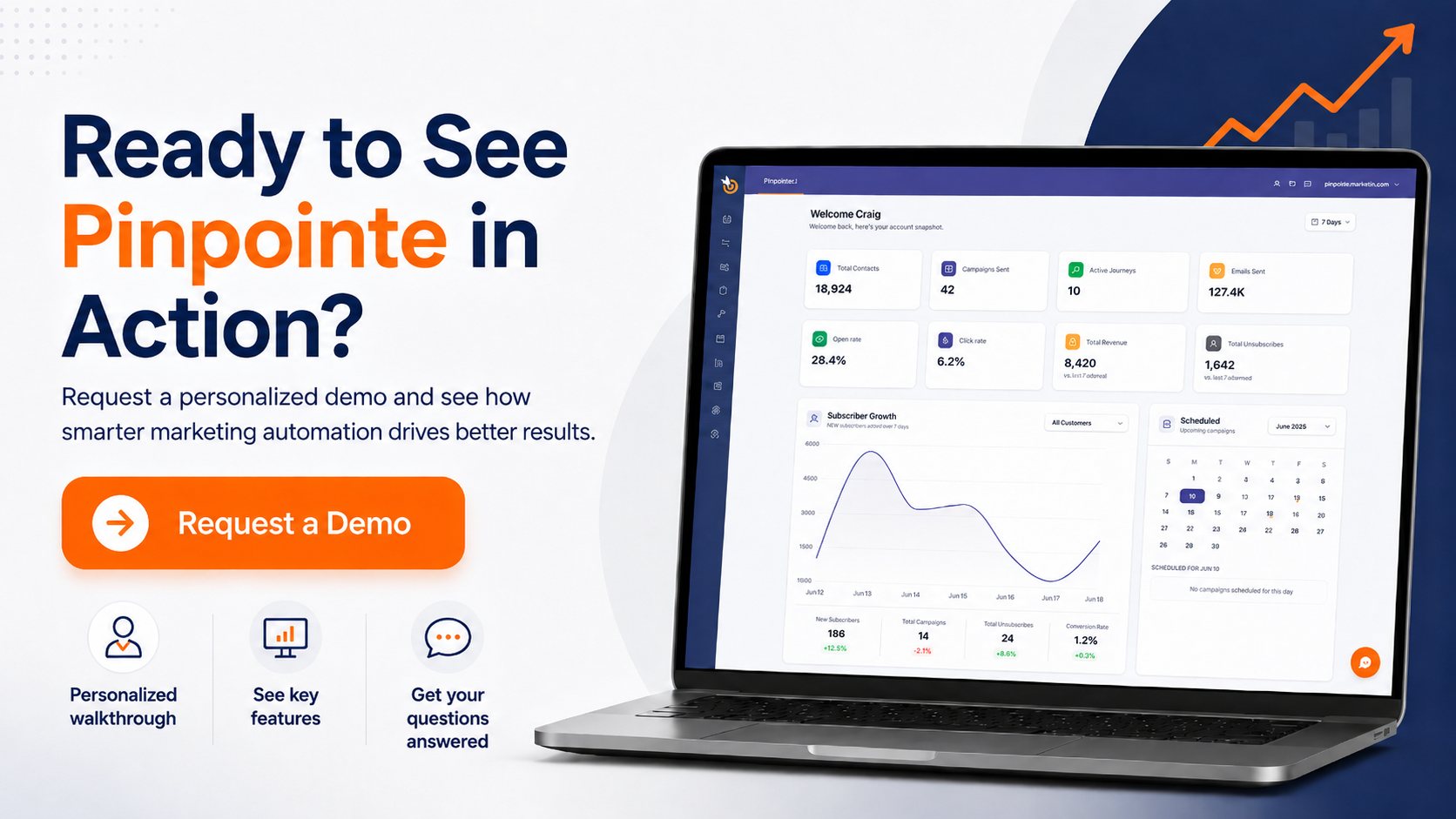
Ready to see this in your own tech stack? Book a 1-on-1 demo. We'll look at your current funnel and show you how visual journeys, dynamic segmentation, and automated triggers can replace your team's manual work. You'll leave with a clear plan for automating your lead engagement from day one.
Frequently Asked Questions About Lead Nurturing
A few quick answers to the questions that come up most once the basics are clear.
What does lead nurturing mean in simple terms?
Lead nurturing means building a relationship with people who are interested but not yet ready to buy. You send relevant, timely content that helps them move toward a decision. Oracle sums it up as cultivating leads that aren't ready to buy yet.
Is lead nurturing only done by email?
No. Email is a common channel, but Shopify recommends pairing it with SMS, retargeting ads, live chat, and social media to reach leads where they are. Oracle also warns against treating nurturing as email-only.
How do you know when a nurtured lead is ready for sales?
Lead scoring is one way to judge readiness. IBM describes scoring as assigning each lead a numerical value based on characteristics and behaviors, which helps sales focus on the leads most likely to buy. Agree on a threshold with sales so both teams share the same definition of ready.
Does lead nurturing work for B2B companies?
It can. In a Demand Gen Report poll, B2B marketers with successful nurturing programs reported an average 20% increase in sales opportunities from nurtured leads. With B2B buyers using an average of ten channels across their journey, staying present over time counts for more than any single touch.