If you feel like most invitation emails still read like a meeting notice nobody asked for, even though the channel behind them is one of the strongest lead sources available to you, you aren't wrong.
Most B2B marketers rank webinars as the channel that produces their best quality leads, which makes that mismatch between performance and execution an expensive one.
Bridging the gap between lead gen hype and real results
That gap between what actually works and how it gets pitched is where most lead generation programs quietly lose people.
You don't need ten new tactics to fix that. You need three lead generation emails, built the right way, sent to the right list, and none of them require an overhauled tech stack to run.
What Actually Counts As A Qualified Lead
Before you build anything, get specific about what you're chasing.
A lead isn't just an email address. It's someone who has shown real interest in what you sell, whether that's downloading something, registering for something, or entering something.
The job after that is lead nurturing. You're not trying to close a sale in the first email. You're trying to earn the next one.
Every one of the lead generation emails below does the same job in a different costume: it gets someone to raise their hand and hand you their contact info in return for something they actually want.
Why this matters more than it used to
Inboxes are crowded, and attention is the scarcest resource your prospects have. A generic "sign up for our newsletter" form doesn't earn either one anymore.
What still works is an exchange. You give something specific and useful. They give you a way to reach them again.
Keep that exchange in mind as you build each of the three campaigns below.
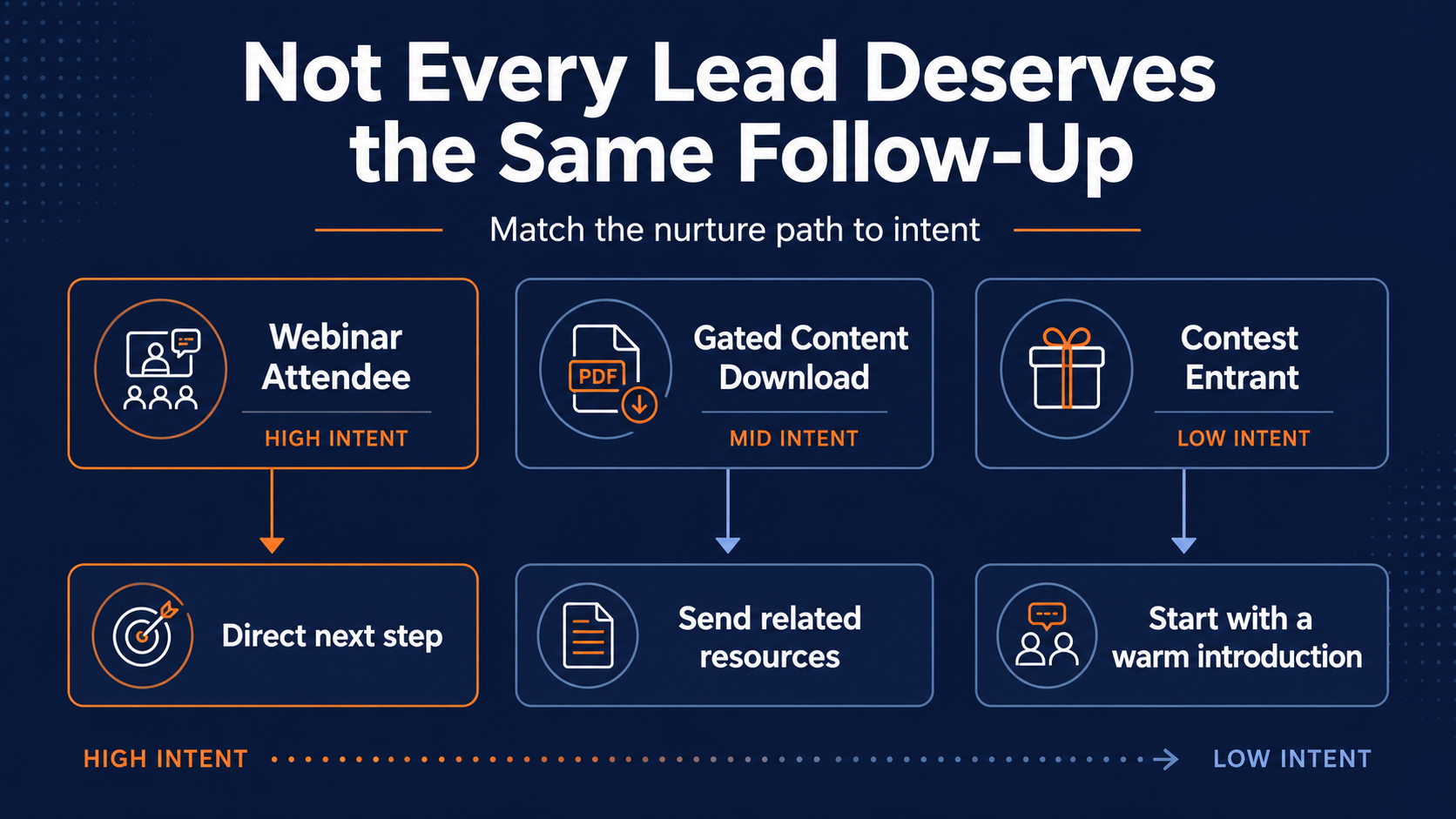
Not all leads deserve the same follow-up
A webinar attendee who stayed for the whole session, a visitor who skimmed a gated PDF for ninety seconds, and a contest entrant who just wanted a chance at a gift card are not the same lead. Treating them identically is one of the fastest ways to waste a list you worked hard to build.
The attendee has already invested real time in your topic. They're closer to a sales conversation than the other two, and your follow-up should reflect that: a direct next step, not another round of generic nurture content.
Handling mid- and low-intent leads
The gated content downloader is somewhere in the middle. They're researching, but they haven't committed the way a live attendee has. Give them related resources before you push a demo request on them.
The contest entrant is the furthest out. Treat that first email as an introduction, not a sales pitch. You have time to build the relationship before you ask for anything more than attention.
Webinars Still Outperform Almost Every Other Lead Magnet
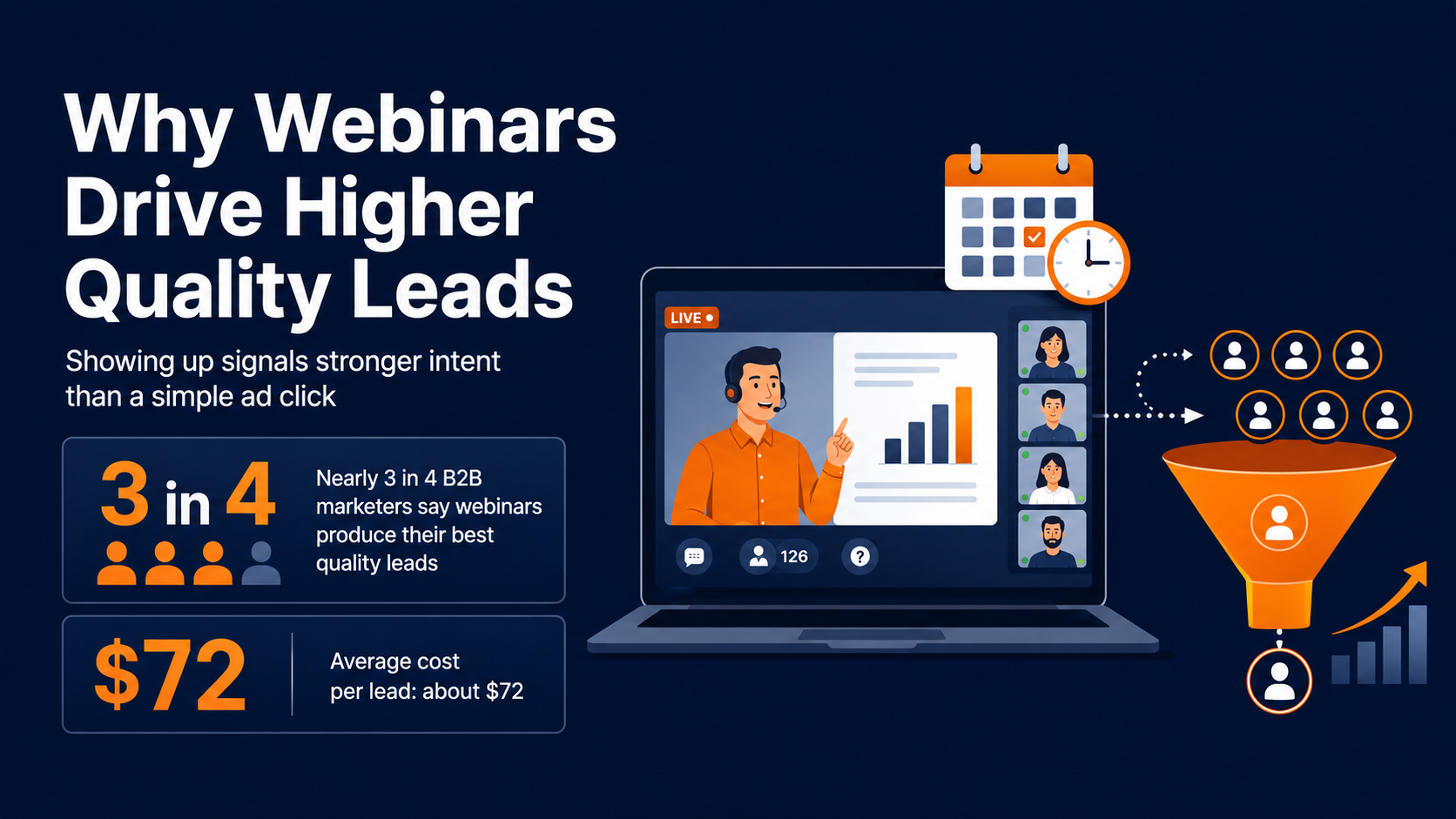
Webinars ask more of your audience than almost any other format. Someone has to clear actual time on their calendar to show up, which is exactly why webinar lead generation consistently outperforms channels that only ask for a click.
That's exactly why they work so well. Nearly three out of every four B2B marketers say webinars produce their best quality leads, and the math backs that up: The average cost per lead from a webinar sits around $72, well below what most paid channels charge for a comparable lead.
People who register for a session and actually show up have already decided your topic is worth their time. That's a different level of intent than a click on an ad.
Why webinar lead generation starts with the session, not the brand
If you've ever caught yourself thinking "nobody wants to hear me talk," you're not alone, and you're also wrong. You picked your niche for a reason. You have a point of view worth thirty minutes of someone's attention.
Start with a topic your audience actually needs, not one that's easy for you to present. Sell digital cameras? Cover how to buy the right one without overpaying for features nobody uses. Sell financial services? Walk through the three retirement mistakes you see most often.
Once you've got the topic, the invitation email has one job: make the value obvious in the subject line. Don't bury what you're offering three lines down. Say it up front.
Segment before you send a single invite
Send your webinar invite to your whole list, and you'll get a room full of people who aren't ready to buy anything from you yet.
Focus on email segmentation first. Target contacts who are early in your sales cycle and actually need the education you're offering. A rushed, generic email blast to everyone gets you registrations that don't convert into anything.
Add a deadline too. "Seats are going fast" only works if it's true, but when it is true, it moves people from "I'll register later" to "I'll register now."
PRO TIP: Cap your registration form at name and email. Every extra field you add past that costs you completions, and you can collect the rest through a quick follow-up once they're already on your list.
Don't let the webinar be the whole campaign
A single invitation email won't fill a room. Plan for at least three touches: the initial invite, a reminder a day or two before, and a last-call email the morning of the event.
Each one can do a slightly different job. The first sells the topic. The second reminds people why they signed up in the first place, since a lot can happen in a busy inbox between registration and the actual date.
The third creates real urgency for anyone who's been meaning to add it to their calendar and hasn't yet.
Converting warm leads before the heat wears off
The work isn't finished when the session ends, either. Send a replay link to everyone who registered, not just the people who missed it. Attendees rewatch sections, and no-shows finally get around to watching when the pressure of a live start time is gone.
That replay email is also your best shot at a direct next step. Someone who just spent thirty or sixty minutes learning from you is warm. Don't let that warmth cool off over a week of silence before your next touch.
Gated Content Only Works When The Gate Is Worth It
Gating an article you'd have written anyway doesn't make it more valuable. It just makes it harder to read.
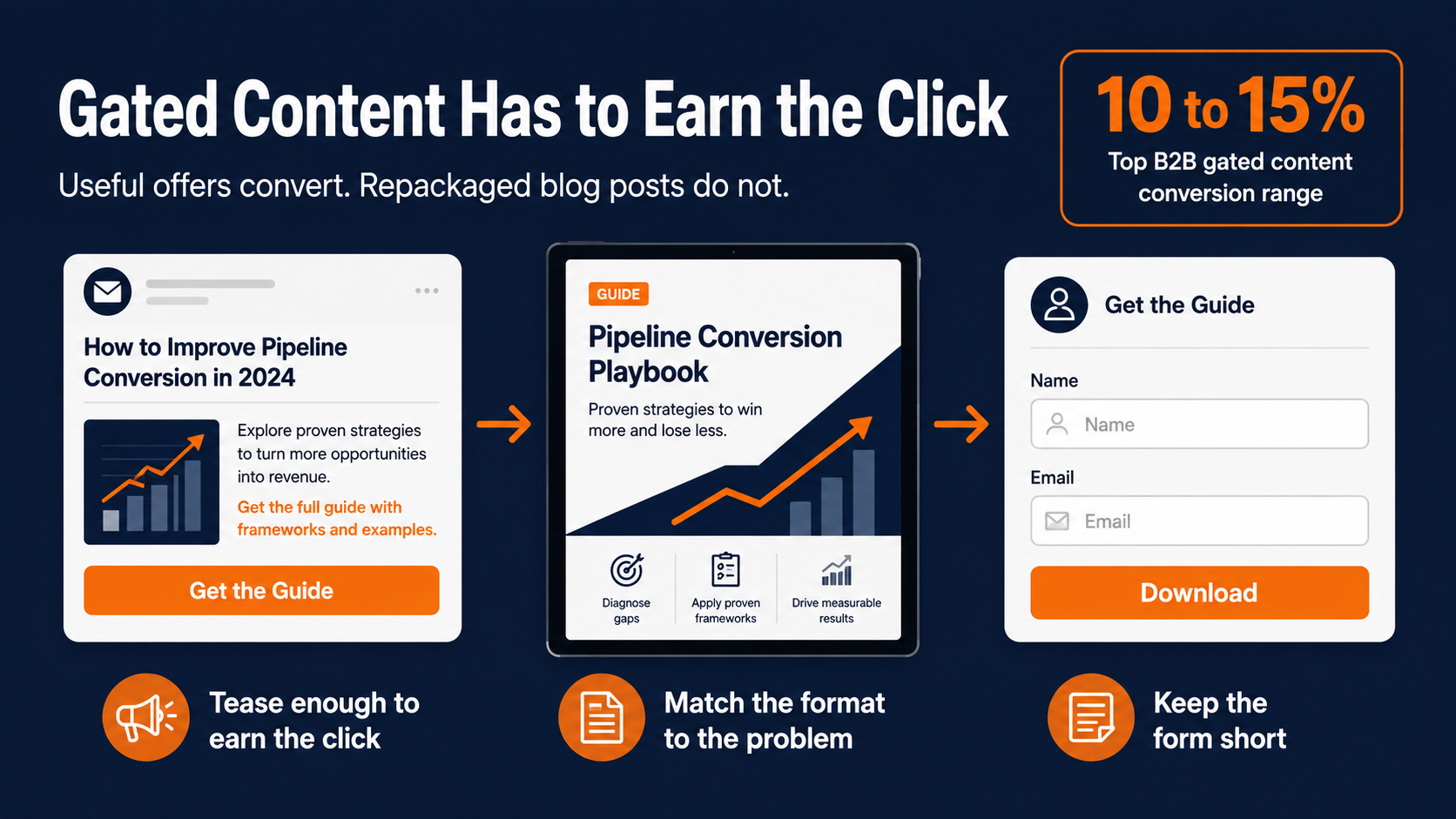
Real gated content is the opposite: something actually worth a name and an email. Top B2B organizations see conversion rates of 10 to 15 percent on their gated content offers, and that number holds up specifically because the content behind the gate earns it.
Original research, a template your reader will actually reuse, a guide that saves them real time. That's the bar. An average blog post repackaged as a PDF isn't.
Tease enough to earn the click
Your promotional email is a trailer, not the movie. Give just enough away that the download feels like the obvious next step, not a leap of faith.
Describe exactly what's inside. Name the specific problem it solves. Then let one clear button do the rest of the work; don't split attention across three competing calls to action.
Keep the form short
Every field beyond name and email is a small tax on your conversion rate. Ask for a job title or company size only if you'll actually use that data to segment your follow-up.
The people who land on your download page have already been convinced by the content teaser in the email. Don't let the form talk them out of it.
Pick the format that matches the problem, not the format that's easiest to make
A checklist and a full research report solve different problems, and using one when the other fits will cost you conversions even if your promotional email is perfect.
If your reader needs a quick answer to a specific, narrow question, a template or a checklist gets them there faster than a thirty-page report ever will.
If you're trying to shift how someone thinks about a bigger strategic decision, a shorter format will feel thin next to the size of the problem they're actually wrestling with.
Match your offer copy to what’s inside
Look at what you already have. A strong blog series can often be repackaged into a guide with far less effort than starting from scratch, and it lets you test whether the topic earns a download before you invest in something built for the gate from day one.
Whatever you land on, make sure the title of the piece matches what the email promised. A mismatch between the promotional copy and the actual content is the fastest way to burn trust with a lead you just spent effort acquiring.
A Social Media Contest Turns Followers Into A List You Own
A follower is not a lead. Platforms can change their algorithm, restrict your reach, or disappear entirely, and you'd lose every one of them overnight.
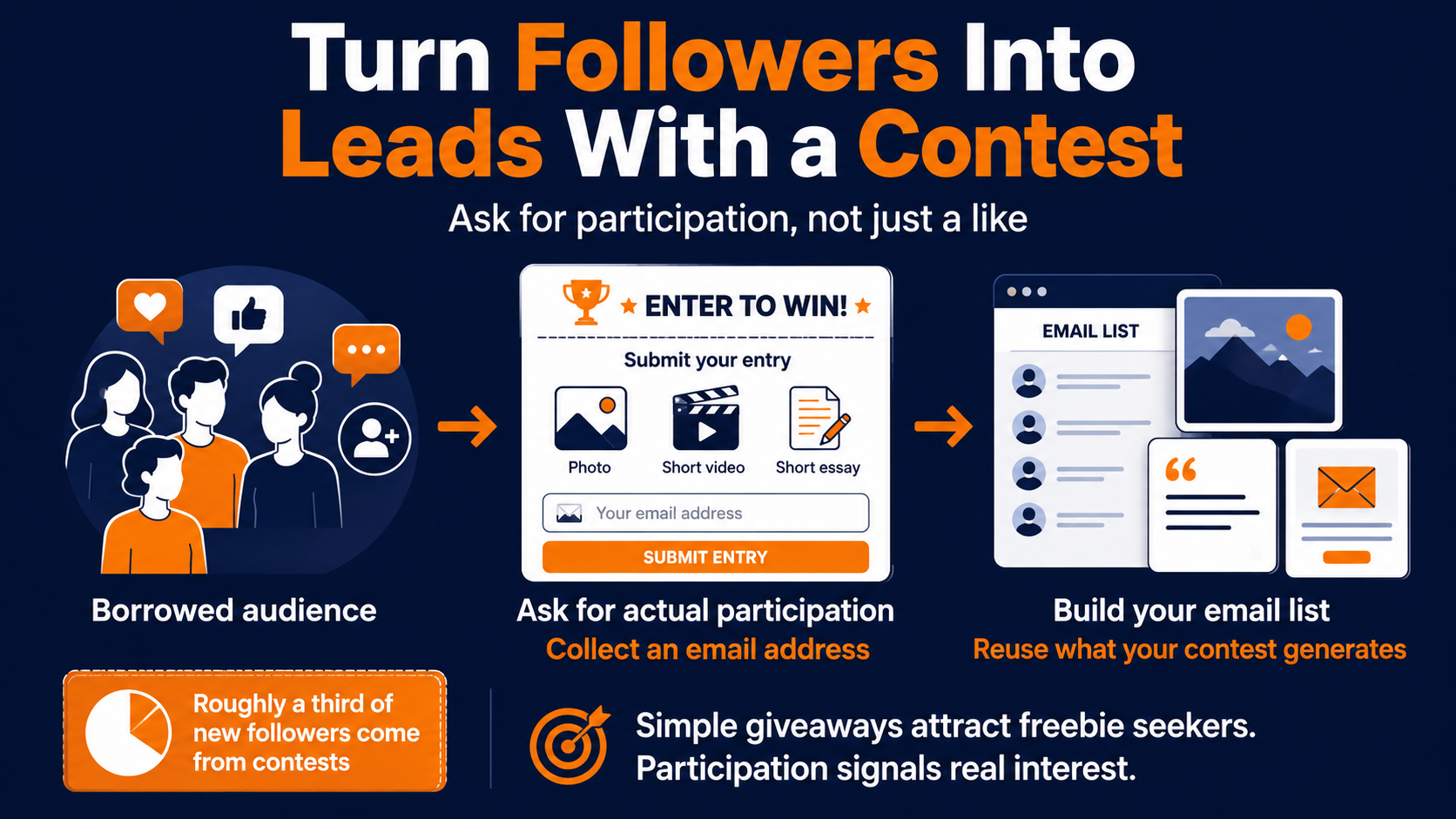
A well-run contest converts some of that borrowed audience into something you actually own: an email list. Roughly a third of the new followers a brand gains come directly from running contests, and a meaningful share of those entrants are willing to hand over an email address as part of entry.
Simple giveaways get you people who want free stuff and nothing else. Ask for actual participation instead, and you filter for people who are actually paying attention to your brand.
Ask for participation, not just a like
A "like and follow to win" contest gets you exactly what it asks for: likes and follows, most of which never convert into anything.
Ask people to submit something instead. A photo, a short video, a quick essay. The act of creating something for you is a much stronger signal of interest than a passive tap.
Whatever you ask for, give your contest a clear, simple name and put it directly in the subject line of your invitation email. Explain exactly what people can win and exactly how they enter. A contest with vague rules gets vague engagement.
Reuse what your contest generates
Once your contest wraps, you're sitting on a pile of content your own customers made for you. Use it.
Feature a winning photo on your social channels. Pull a strong quote from a submitted essay into your next newsletter. Just make sure your contest rules cover permission to reuse entries before you publish anything.
PRO TIP: Build the reuse rights into your entry form up front, not as an afterthought once you've already picked a favorite submission. A single checkbox at signup saves you an awkward follow-up email later.
Keep the look consistent from email to entry page
Nothing kills trust in an entry flow faster than a mismatch between the invitation and the landing page it points to.
Use the same colors, the same fonts, and the same tone across your invitation email and your contest page. When someone clicks through, and the page looks like a completely different brand sent it, hesitation creeps in right at the moment you need confidence instead.
How visual alignment protects your campaign performance
This matters even more if you're running the contest across multiple channels at once. An email invitation, a social post, and a landing page that all feel like the same campaign reinforce each other.
A patchwork of mismatched designs makes the whole thing feel less official, and less official means fewer completed entries.
Consistency is a small detail with an outsized effect on conversion. It costs you almost nothing to fix, and it's one of the most common gaps between a contest that performs and one that quietly underdelivers.
Which Lead Magnet Fits Your Funnel Stage
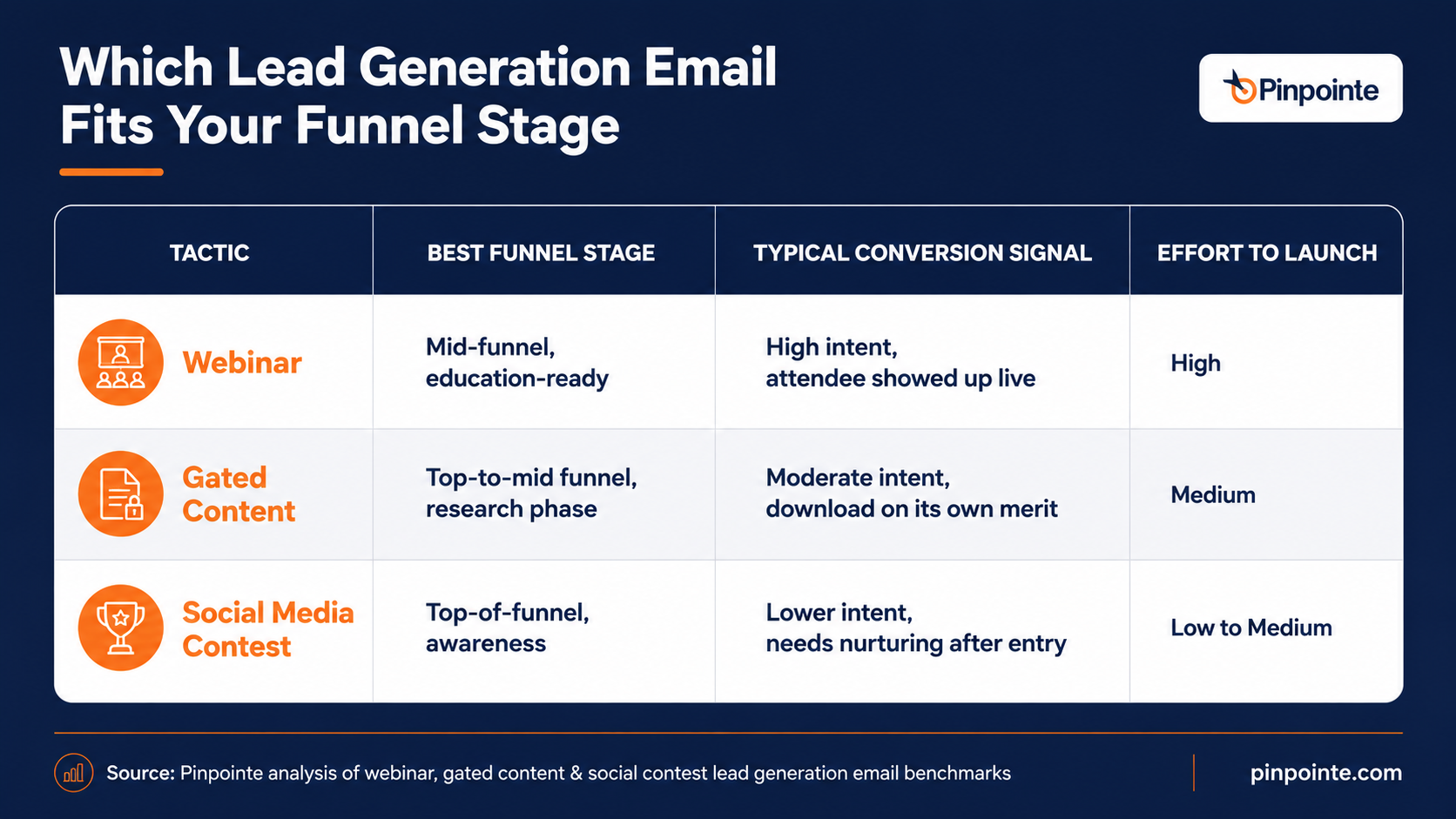
Not every one of these lead generation emails belongs at the same point in your funnel. Here's how the three stack up against each other:
|
Tactic |
Best Funnel Stage |
Typical Conversion Signal |
Effort To Launch |
|
Webinar |
Mid-funnel, education-ready |
High intent; attendee showed up live |
High |
|
Gated content |
Top-to-mid funnel, research phase |
Moderate intent; download on its own merit |
Medium |
|
Social contest |
Top-of-funnel, awareness |
Lower intent; needs nurturing after entry |
Low to medium |
Run all three, and you're covering your funnel from first touch to sales-ready, instead of leaning on webinar lead generation alone to do every job at once.
Where Pinpointe Fits Into Your Lead Capture Strategy
None of these three tactics matter if the leads they generate sit in a spreadsheet nobody follows up on.
That's the part most teams get wrong. You capture a name and an email from a webinar registration, a gated download, or a contest entry, and then... nothing happens for three days while someone gets around to building a follow-up sequence by hand.
Deliver relevant content while intent is highest
Whether the source is webinar lead generation, a gated download, or a contest entry, Pinpointe's behavioral triggers close that gap automatically.
The moment someone registers for your webinar, they can drop straight into a reminder sequence, no manual setup required for each new signup. The moment someone downloads your gated guide, a follow-up email referencing that exact piece of content goes out while the topic is still fresh in their head.
Because Pinpointe handles email and SMS from the same platform, you're not stuck choosing one channel for your nurture sequence. A contest winner can get an email announcing the results and a text reminder about a follow-up offer, both triggered from the same entry event.
Replace a one-size-fits-all email nurture sequence with source-based nurturing
Dynamic segmentation means your webinar attendees, your gated content downloaders, and your contest entrants don't all land in one undifferentiated bucket. Each source gets nurtured based on how they actually arrived, not a one-size-fits-all drip that ignores what brought them to you in the first place.
Real-time engagement data closes the loop on all three. When a webinar attendee opens your replay email a second and third time, or a gated content downloader clicks through to a related resource, that behavior can automatically move them into a more sales-ready segment.
You're not relying on someone manually reviewing a spreadsheet once a week to catch that signal. It happens as it occurs, and the next message reflects it.
Revive quiet prospects with cross-channel triggers
That matters most for the leads sitting in the middle of your funnel, the ones who aren't ready for a sales call yet but aren't cold either.
A journey builder that connects email and SMS behind the same trigger means a downloader who goes quiet for two weeks can get a short, low-pressure text nudge instead of another long email they're likely to skip.
Turning Three Lead Sources Into One Nurture Sequence
A list without a follow-up plan is just a spreadsheet with good intentions.
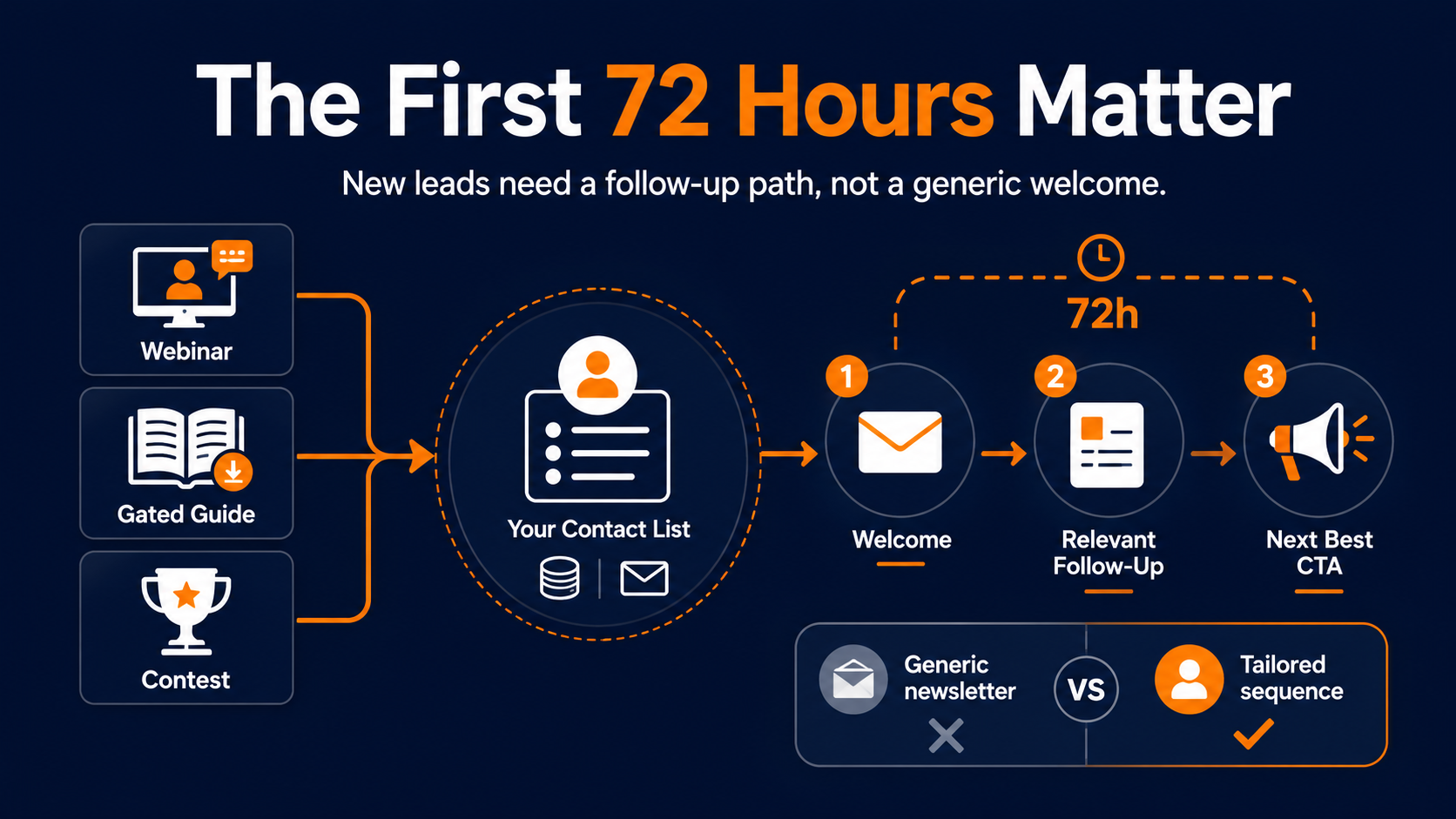
Whichever of these lead generation emails you send first, the real work starts the moment someone hands you their email address. That's when a generic welcome message loses them, and a sequence built around what actually got them there keeps them moving.
Where lead generation programs actually break down
Most teams get the capture part right. They run the webinar, build the gated guide, launch the contest, and watch the list grow. Where things fall apart is the week after, when the excitement of a new signup fades into the same routine newsletter everyone else on the list already gets, regardless of how they arrived or what they were actually interested in.
Fixing that doesn't require ripping out your current stack and starting over. It usually means taking a hard look at what happens to a new contact in the first seventy-two hours after they convert, and closing the gaps you find there first.
Which of your current lead sources doesn't have a real nurture sequence behind it yet?
Find out where the gaps are before you build another campaign on top of them. Schedule a marketing automation audit and get a clear look at how your webinar registrants, gated content downloaders, and contest entrants are actually being followed up with today, and where Pinpointe can close the distance between a captured lead and a converted one.