You already believe email works. What you might not believe is how much money you're leaving on the table by sending the same message to everyone on your list.
That gap between “email works” and “email works well” is almost never about the channel. It's about the eight or nine decisions you make before you hit send, and most of them have nothing to do with clever copy.
Bridging the gap between having an email marketing strategy and it actually driving results
A real email marketing strategy fixes that gap. Not a content calendar, not a prettier template. A strategy that decides who gets which message, when, and why before you write a single subject line.
Let's get into the decisions that actually move revenue.
Know Who You're Actually Talking To
Here's an uncomfortable question. When was the last time you looked at your subscriber list and asked whether every single person on it wants the exact same email?
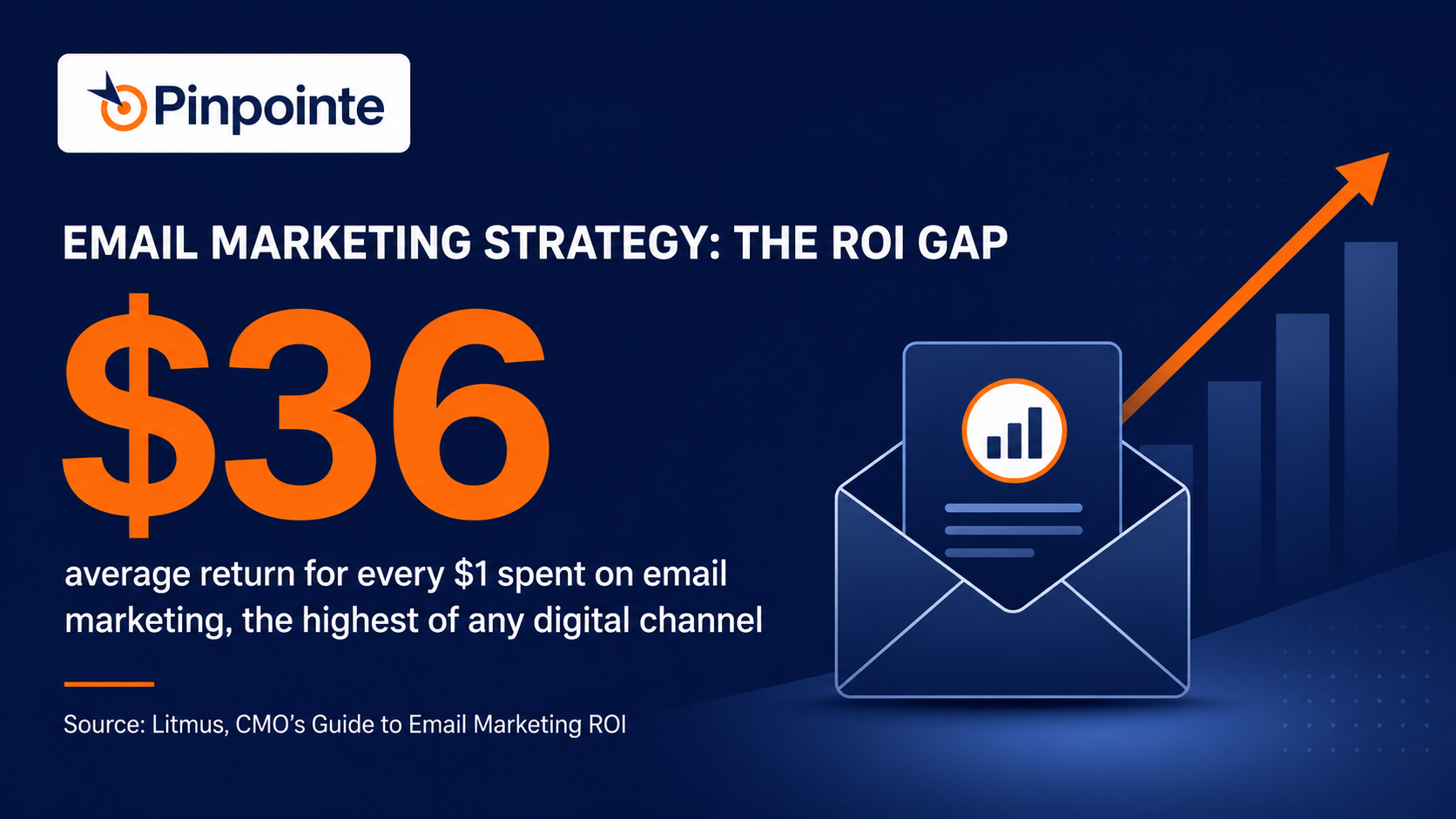
If you're sending one blast to your whole list, the answer is probably never. And that's expensive. Email drives an average return of $36 for every dollar spent, higher than any other marketing channel, but that number assumes you're sending relevant messages.
A generic blast doesn't get that return. It gets whatever's left after your least-interested subscribers tune out.
Segment before you write a single word
Email list segmentation often feels like a technical chore. But it's really just sorting your list into groups of people who care about the same things, then writing to each group like you know them.
How to build your next high-value segment today
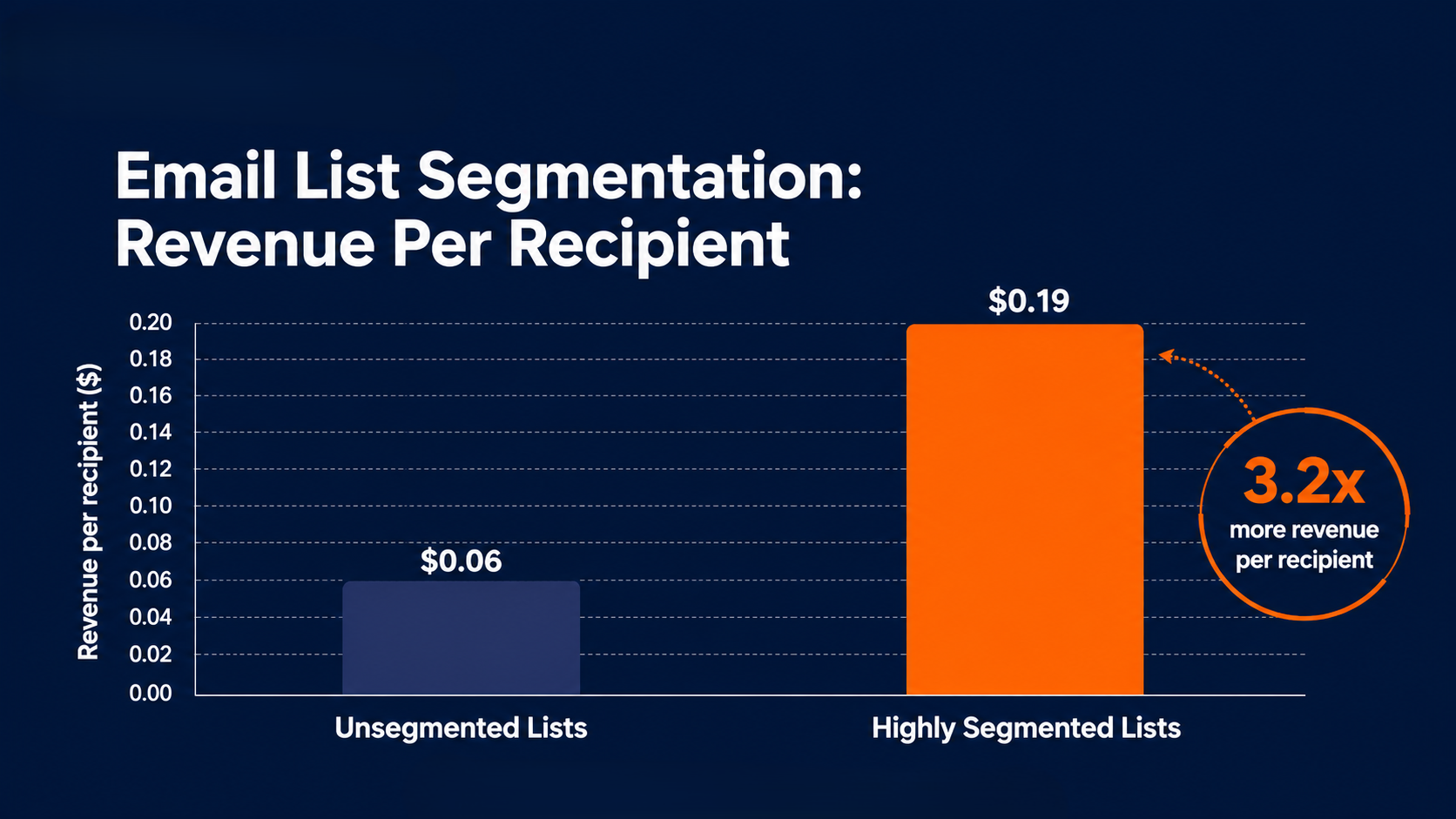
Highly segmented lists return more than three times the revenue per recipient of unsegmented lists. Not three times the open rate. Three times the actual money per person on the list.
That's not a rounding error. That's the difference between a list that pays for your marketing budget and one that quietly drains it. Any email marketing strategy that skips this step is leaving that difference on the table.
Start simple. Location, purchase history, engagement level, product interest. Pick two of those, combine them, and you already have a segment worth writing a dedicated email for.
Build the segments your revenue actually depends on
You don't need fifty segments to see this work. You need the three or four that separate your highest-intent people from everyone else.
A recent purchaser gets a different email than someone who opened your last five sends and clicked nothing. Treat them the same, and you'll bore the first group and annoy the second.
Here's a simple way to think about the split:
|
Segment |
What they need to hear |
What kills the message |
|
Recent purchasers |
Complementary products, care tips, loyalty perks |
Discounts on what they just bought |
|
Engaged non-buyers |
A nudge toward the specific thing they clicked |
A generic newsletter recap |
|
Cold subscribers |
One clear reason to come back, or a re-permission ask |
More of the same content that lost them |
|
VIPs and repeat buyers |
Early access, recognition, higher-touch offers |
Being lumped into the general list |
Notice none of these categories are complicated. Most email list segmentation programs fail not because the logic is hard, but because nobody set the rules up in the first place and everyone kept defaulting to “send to all.”
Let behavior do the sorting for you
The best segments aren't the ones you set once and forget. They're the ones that move people automatically based on what those people actually do.
Someone who clicks three product emails in a row should land in a different track than someone who hasn't opened anything in two months.
Replacing manual list management with dynamic logic
If your platform can't move people between segments on its own, you're stuck doing that sorting manually, which means it mostly doesn't get done.
Set the rule once, let behavior trigger the movement, and check back in a month to see whether the segments still make sense.
That's the whole maintenance cycle once email marketing automation is doing the sorting instead of you. It's not a weekly chore once the logic is built correctly the first time.
Make the First Email Count
Your welcome email is the one message almost guaranteed to get read. Attention is high, curiosity is high, and the subscriber hasn't decided yet whether you're worth their inbox space.
Waste that moment, and you don't get it back.
Design your welcome email like an introduction, not a brochure
Say something true about your brand in the first two lines. Skip the corporate throat-clearing and the “we're so excited you joined!” filler that every list uses.
Give them one clear next step. A discount, a best-seller, a quick answer to the question new subscribers actually have. One CTA, not five competing for attention.
A few things worth including while you're building it out:
- A reason to trust you, not just a reason to buy from you
- One offer, stated once, not repeated three times in different fonts
- A way to tell you what they're actually interested in, so your next email is already better targeted
- Your social presence, but as a footnote, not a competing headline
Automate it so timing never depends on you remembering
This is where a lot of small operations lose the thread. Somebody has to be logged in and paying attention for a manual welcome email to go out on time, and that somebody is busy.
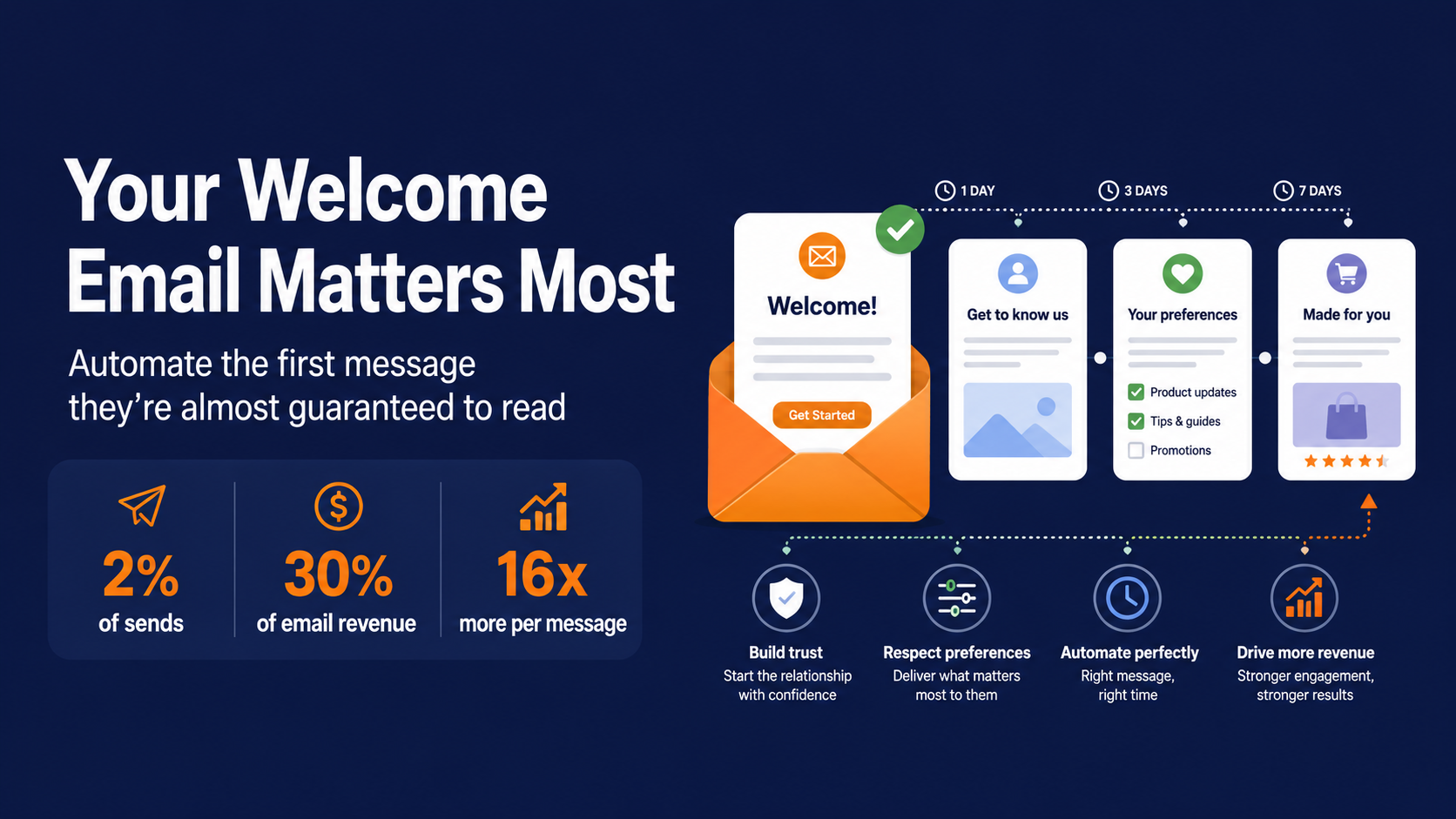
Automated welcome and abandoned-cart flows made up just 2% of email sends but drove 30% of total email revenue in a recent analysis of ecommerce sending patterns, earning roughly sixteen times more per message than one-off campaigns. Set the flow up once, and it keeps performing on a Tuesday at 2 am without you touching it.
That's the entire case for email marketing automation in one sentence. It's not about doing more. It's about the one email that matters most never depending on whether you happened to be at your desk.
Give the welcome series room to breathe
A single welcome email is fine. A short series, three or four emails spread over a week or two, tends to work better because it lets you introduce the brand, make an offer, and show off a product without cramming all three into one crowded message.
Each email in the series should do one job. Combine all the jobs into email one, and you'll end up with a message nobody finishes reading.
Stop Sending Like a Stranger
Generic emails read as if they came from a company. Personal ones read like they came from a person who happens to work for a company you like.
That's the entire difference, and subscribers can feel it in the first sentence.
Using email personalization past the first name
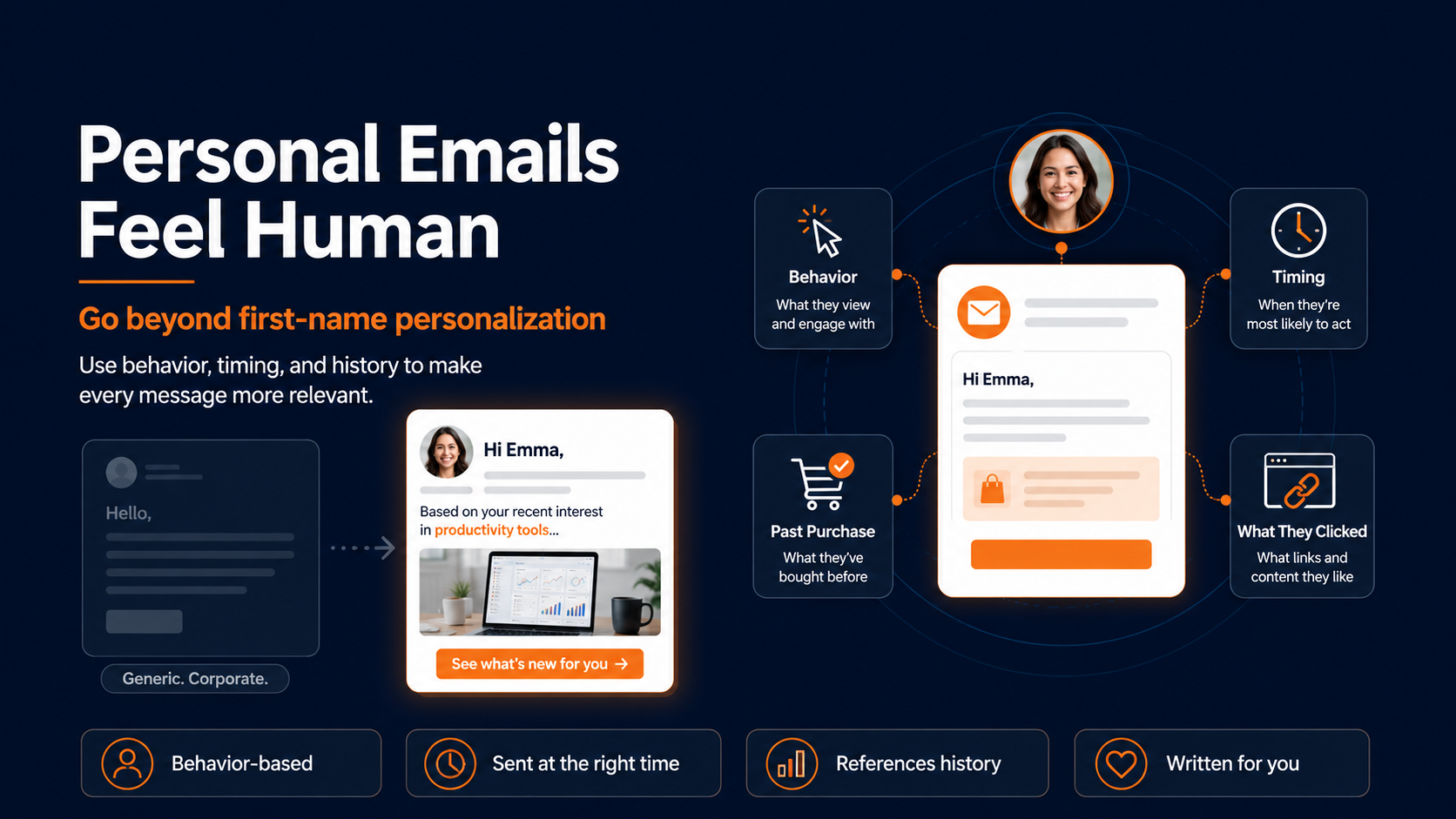
First-name personalization is table stakes at this point, not a differentiator. Real email personalization comes from referencing what someone actually did, not just who they are.
- Trigger emails based on behavior, not a calendar.
- Send at the time zone and hour that matches their pattern, not yours.
- Reference something specific to their history with you, like a past purchase or an abandoned browse session.
- Let the subject line reflect what they clicked, not a generic campaign name.
Make the small moments count
Think about the last coffee shop or retailer that sent you a birthday discount that actually felt noticed, versus the generic “we miss you” that shows up whether or not you've ever bought anything. One reads like a form letter. The other reads like someone paid attention.
Same channel. Same automation tools, most likely. Completely different relationship with the person receiving it.
Keep the “we” for your brand, not your subscriber
One quiet mistake shows up constantly in email copy: writing as though the subscriber and the brand are on the same team. They're not, and pretending otherwise feels off.
Address the reader as “you.” Save “we” for when you're actually talking about your own company or your own product.
Show Up Consistently Without Turning Into Spam
Plenty of marketers hold back on sending because they're afraid of looking like spam. That fear is usually misplaced, and it costs more than it protects.
Your subscribers opted in. They asked for this. Silence doesn't make you look considerate, it makes you forgettable.
Set a cadence and stick to it
Weekly is a reasonable default for most lists. Whatever you pick, the goal is predictability, not frequency for its own sake. A subscriber who knows roughly when to expect you is a subscriber who's still paying attention six months from now.
Going quiet for two months and then sending three emails in a week does more damage than either extreme alone. It reads as neglect followed by desperation.
Watch engagement, not just your own nerves
If opens and clicks are holding steady or climbing, you're not spamming anyone. If they're dropping, that's a segmentation problem or a relevance problem, not a “send less” problem. Fix the targeting before you touch the frequency.
Pull the numbers monthly. A slow decline is easy to miss week to week and much harder to reverse once it's been going on for six months.
Let the unengaged tell you something
Anyone who hasn't opened anything in ninety days or more isn't part of your active list anymore, even if they're technically still on it. Move them into a separate re-engagement track instead of continuing to send them the same weekly blast everyone else gets.
This isn't just good hygiene. Sending less relevant content to disengaged subscribers protects your sender reputation for the emails that actually matter, and it's exactly the kind of housekeeping email marketing automation should be handling without a reminder from you.
Write Subject Lines Worth Opening
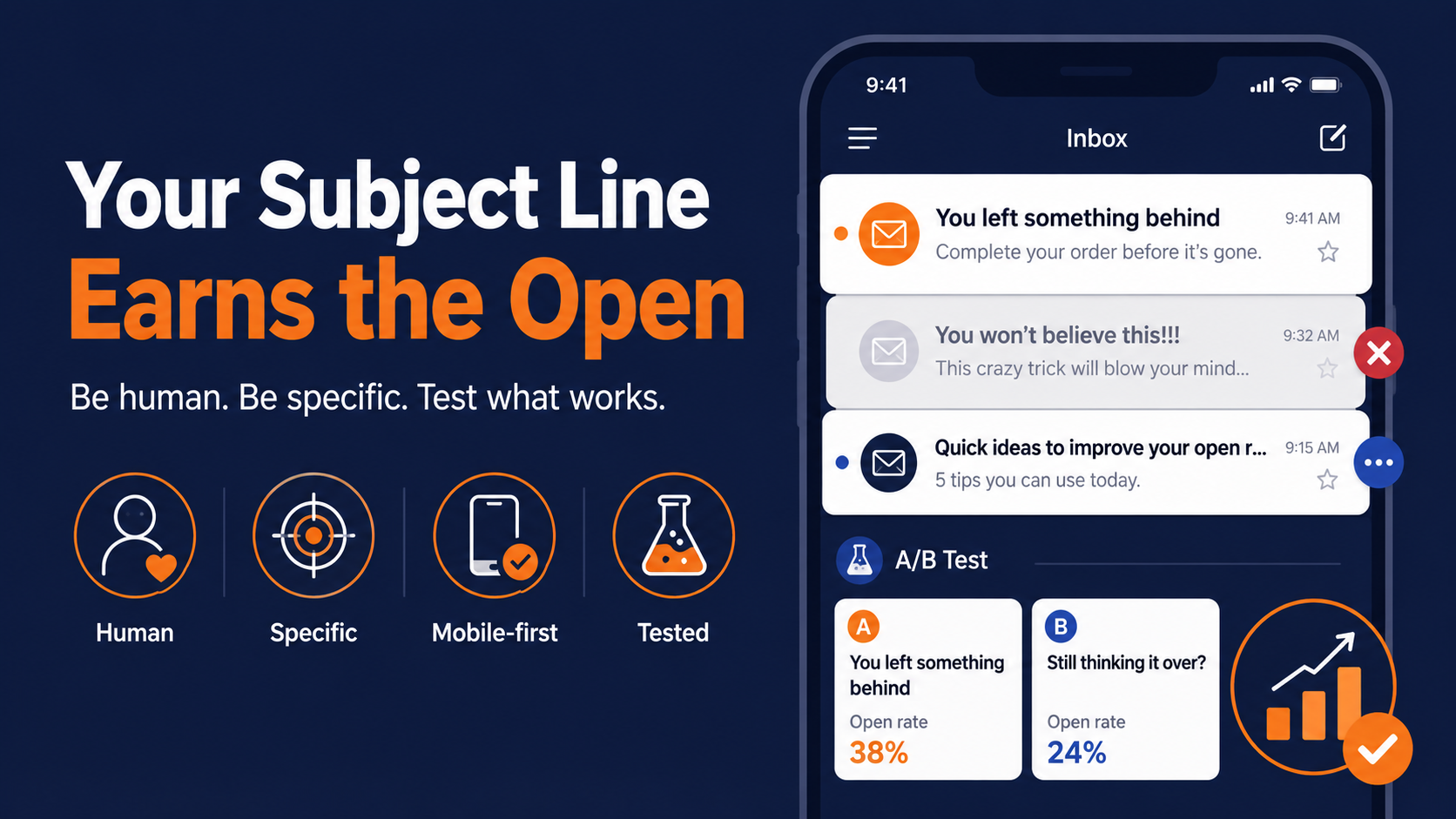
The email subject line is the only part of your email every recipient sees before deciding whether the rest matters. Everything you wrote inside is invisible until that line earns the click.
Keep it human. Skip the tricks that feel like a trick, because subscribers have gotten very good at spotting a subject line built to manipulate rather than inform.
Say what the email actually is
A little personality helps. A little humor, when it fits your brand, helps more than another exclamation point ever will. What doesn't help is vague mystery for its own sake.
Tell them enough to know why this email is worth ten seconds of their day. “You left something behind” works because it's true and specific. “You won't believe this!!!” works against you because it's neither.
Keep it short enough to read on a phone
Most subject lines get read on a screen the size of a palm. If the point of your line doesn't land in the first several words, it's probably getting cut off before anyone sees the payoff.
Front-load the useful part. Save the flourish, if you need one, for the second half.
Test before you assume you know
You probably have opinions about which subject line will win. Test anyway. Send two versions to a small slice of the list, let the winner run to everyone else, and let the data settle the argument instead of whoever spoke last in the planning meeting.
A single test a month adds up. Over a year, that's twelve small optimizations compounding into a noticeably better baseline, and none of them required guessing right the first time.
Keep the Email Itself Worth Reading
Getting the open is only half the job. Once someone's in, the content has to hold up its end.
Write like a person, not a press release
Write like you're talking to one person, not broadcasting to a list. Cut anything that reads like it was written for a committee. Address the reader as “you,” treat your brand as “we,” and let a real voice come through instead of a corporate tone.
Shorter is almost always better here. If a paragraph runs long, split it. If a sentence needs three commas to finish its thought, cut it in half.
A few structural habits pay off every time
- Keep outbound links to a small handful. Too many and inbox providers start treating the message like spam before a human even sees it.
- Close with something that invites a reply. A quick question works better than a hard sell for keeping the conversation alive.
- Mix in a photo, a short video, or a customer quote when it actually adds something, not because every email template expects one.
- Read it out loud before you send it. Anything you'd never actually say to a person's face probably shouldn't be in the email either.
None of this requires more effort. It requires editing with the reader in mind instead of the calendar deadline in mind.
How Pinpointe Fits Into All of This
None of the above is complicated in theory. It gets complicated in practice the moment your list crosses a few thousand people, and you're trying to run segmentation, welcome flows, behavioral triggers, and consistent sending all by hand.
Why every email strategy eventually demands automation
That's the actual problem email marketing automation solves. Not “make email fancier.” Make the habits above happen automatically, for the right person, at the right moment, without you rebuilding the logic every single week.
Every piece of your email marketing strategy above depends on marketing automation eventually. The only question is whether you build it now or after you've outgrown doing it by hand.
Pinpointe's journey builder lets you set the segmentation logic once and let behavior do the sorting from there. A new subscriber lands in the welcome flow the second they opt in. A customer who hasn't opened anything in ninety days moves into a different track automatically, without anyone remembering to check a spreadsheet.
The real-time engagement data underneath it means you're not guessing whether your cadence is working. You can see, segment by segment, whether opens and clicks are holding steady or sliding, and adjust before a shrinking list turns into a shrinking revenue line.
Smart omnichannel marketing workflows that speak to each other
And because email and SMS live in one platform, the welcome message and the schedule a demo nudge can hand off to each other instead of running as two disconnected tools that never talk to each other.
A subscriber who ignores the email gets the SMS follow-up automatically. Nobody has to remember to check whether the first message worked before deciding to send the second.
If you've read this far and recognized your own list in the “one blast to everyone” description, that's usually the moment worth acting on, not filing away for later.
Building the Habit That Actually Grows Revenue
Every idea in this piece points at the same underlying shift, and together they're the core of any email marketing strategy worth running. Stop treating your list as one audience and start treating it as several audiences who happen to share an inbox provider.
Segmentation, a real welcome sequence, behavior-based personalization, a cadence you can defend, subject lines that respect the reader's time, and copy that sounds like a person wrote it.
Diagnosing the gaps in your email marketing strategy
None of these are hard individually. What's hard is doing all six consistently, every week, without a system behind you.
Most lists aren't underperforming because the ideas are unknown. They're underperforming because nobody built the infrastructure to run all six at once, so the list quietly defaults back to “send the same thing to everyone” the moment things get busy.
So which one of these is your list actually missing right now?
Still Sending the Same Email to Everyone?
If the answer to that question is yes, you already know which section of this piece to revisit first. Segmentation is the one change that makes every other tactic here work harder, and it's usually the one thing nobody gets around to actually building.
Schedule a marketing automation audit with Pinpointe, and we'll walk through your current sends, segment by segment, and show you exactly where the revenue is sitting unclaimed.