Your best landing page can be perfectly designed, fast-loading, and sitting at a clean URL, and still get zero visits if nobody on your list knows it exists. That's the part a lot of marketers skip. You obsess over the page. You barely think about the email that's supposed to send people there.
Capitalize on the audience that already knows your brand
Email marketing is still one of the most direct ways you have to put a link in front of someone who already knows your brand. Not a stranger scrolling social media.
Not a cold search visitor who might bounce in four seconds. Someone who opted in, who's read your name before, who's one click away from your site right now.
If you're looking for ways to increase website traffic with email marketing, the biggest gains rarely come from a fancier template. They come from the five habits below.
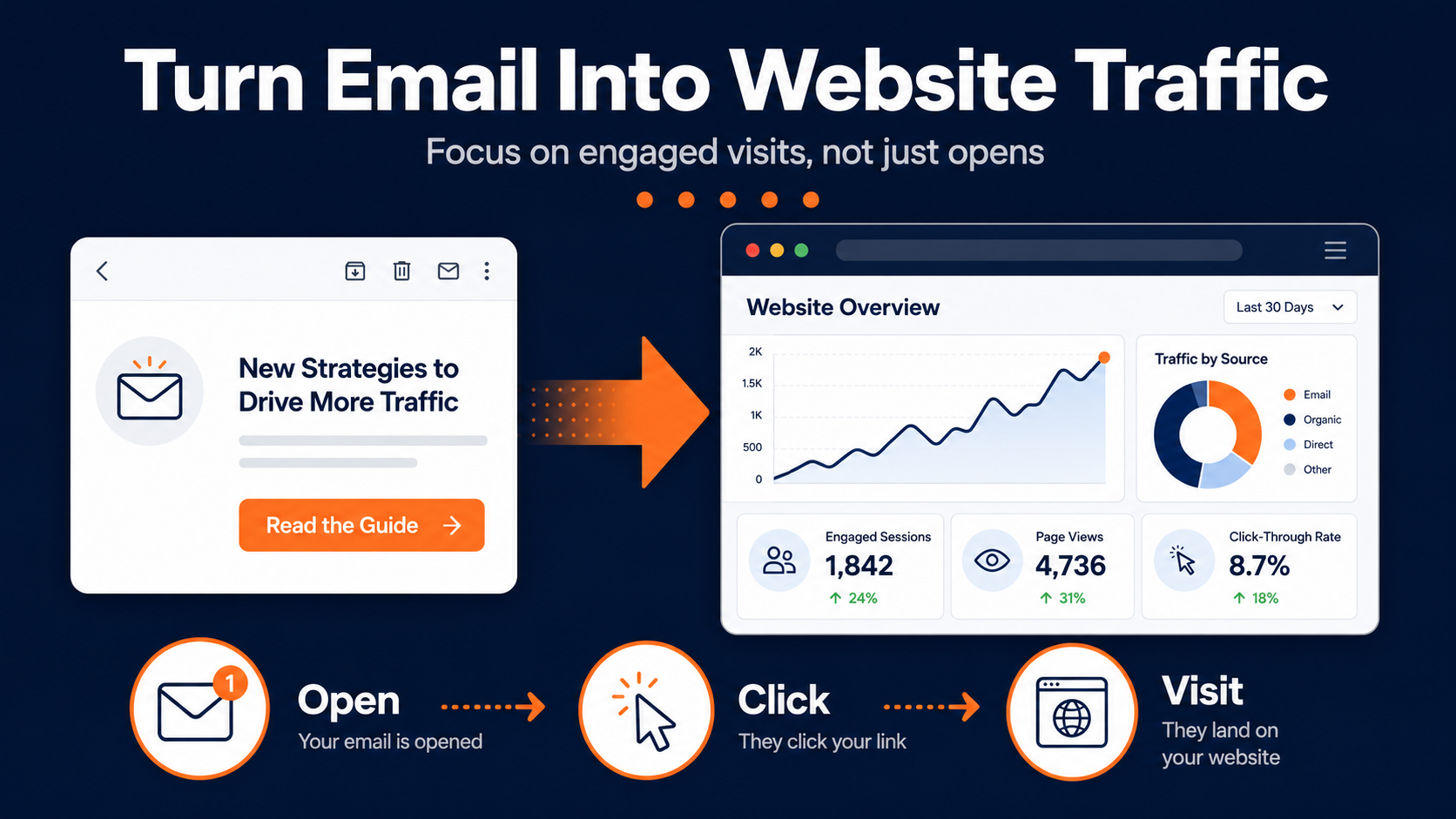
Focus on driving engaged site visitors, not just email opens
Most marketers treat email and website traffic as two separate scorecards. One team owns opens and clicks. Another team owns sessions and bounce rate.
That split is exactly why so many emails get sent without a clear answer to the question that actually matters: did this send put a real, engaged person on my site?
The five approaches below all point at that same question from a different angle. What they have in common is simple: they treat your inbox send and your website as one connected system, not two departments reporting separate numbers to different people.
A quick gut check before you send another campaign
Before you write another subject line, ask yourself: does this email actually earn a click to my website, or is it just filling a calendar slot? If you can't answer that fast, the five things below will help.
Start With A List People Actually Want To Be On
Every traffic tactic below falls apart if your list is garbage. A pile of scraped or purchased addresses doesn't convert. It just gets you flagged as spam and tanks the delivery of every email after it, including the good ones you actually worked hard on.
Skip the purchased list entirely. If you want to grow your email list the right way, social channels, gated content, and on-site signup offers give people an actual reason to hand over their email address instead of a reason to hit report-spam.
A gated guide, a discount code, or early access to something useful will always out-convert a bare “subscribe to our newsletter” box. People don't want another newsletter. They want a specific, tangible reason to trade their inbox for your content.
Grow your email list with a confirmation step, not just a signup box
Use a double opt-in on your signup forms. Yes, you'll lose some people who never confirm. Those people were never going to click through to your site anyway, so you're not really losing anything you could have used.
A confirmed subscriber has already done two things a purchased contact never has: typed their real address and clicked once to prove they meant it. That's someone who's primed to click a third time when your next email lands.
Why a smaller list can drive more traffic than a bigger one
A smaller, confirmed list of people who actually want your email will out-click a bloated list of maybes every time. You're not being graded on subscriber count. You're being graded on how many of those subscribers land on your site and do something once they get there.
There's a hard deliverability reason for this too. Gmail's own sender guidelines require bulk senders to keep their spam complaint rate below 0.1%, and never let it reach 0.3% or higher, or lose access to inbox delivery support entirely. A purchased or uninterested list generates exactly the kind of spam reports that push you over that line, which means every email after that one, including the ones going to people who actually want to hear from you, gets hurt.
PRO TIP: If your list hasn't been cleaned in the last six months, do that before you touch anything else here. Every tactic below performs worse against a stale list, no matter how good the email itself is.
Your welcome email sets the traffic pattern for everything after it
The first email a new subscriber gets from you trains them on what to expect. If that welcome email doesn't include a real link worth clicking, you've taught them that your emails are safe to skim and ignore.
Give the welcome email one clear destination on your site, a best-of-content page, a getting-started guide, or a specific product category.
That first click matters more than people give it credit for, because it's the moment a subscriber decides whether your emails are worth opening next time.
Match Your Landing Page To The Email That Sent It
Here's a pattern you've probably lived through as a subscriber yourself. An email promises one specific thing. You click. The page you land on talks about something else entirely, or worse, it dumps you on a generic homepage.
That mismatch is a traffic killer. You already spent the hard part, getting the click. Building dedicated landing pages for email campaigns instead of dropping every send onto your homepage is one of the more reliable ways to increase website traffic without spending anything extra on the send itself, and it keeps that momentum instead of wasting it on a page that makes the visitor start over mentally to figure out where they landed and why.
Build dedicated landing pages for each email campaign
Every email campaign with a specific offer deserves its own landing page built around that exact promise, matching the headline, the image, and the tone of the email that sent the click.
A recent survey of working marketers found that email marketing is the single most common tactic used to drive traffic to landing pages, ahead of social media, paid ads, and SEO combined. That leading position earns your landing pages the same attention you'd give a page built for paid search traffic.
The CTA inside the page matters as much as the one inside the email
Don't stop optimizing at the subject line. That same research found that personalized calls to action convert 202% better than generic, one-size-fits-all versions.
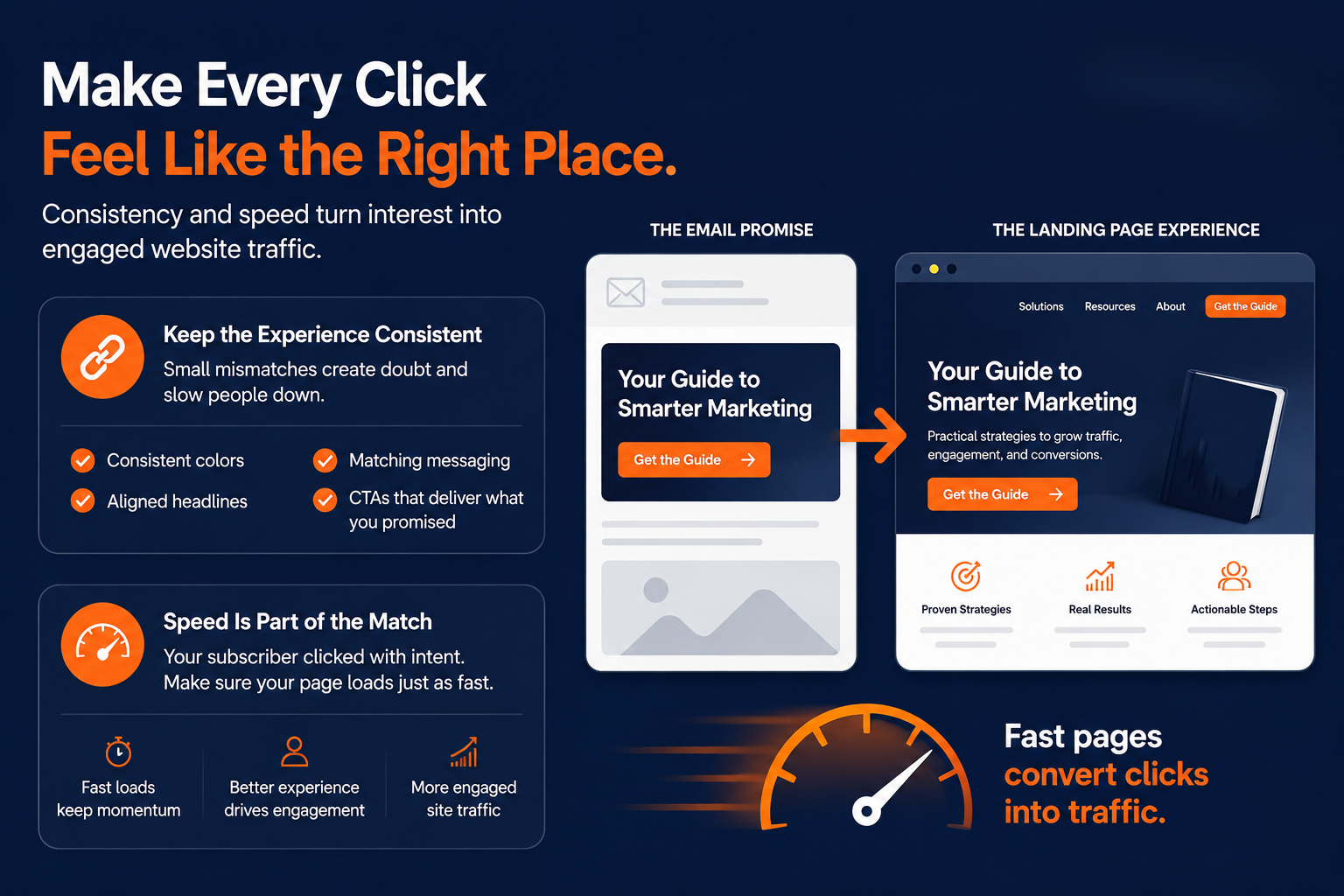
If your email CTA says “See the guide,” your landing page headline should not say “Welcome to our website.” Keep the promise consistent from the subject line, through the body copy, all the way to the button someone clicks once they land.
Small mismatches cost you more than big ones
You'd catch it if your landing page pitched an entirely different product. The mismatches that quietly bleed traffic are smaller: a different color scheme, a headline that's technically related but not identical, a CTA button that says “Learn More” when the email promised something specific.
Matching fonts for their own sake misses the point. What actually matters is keeping the visitor moving forward instead of pausing to second-guess whether they clicked the right thing.
Speed is part of the match, not a separate technical checklist
A subscriber who clicks through from their inbox is already primed to act. If the page takes several seconds to load, that momentum is gone before they even see your offer.
Treat page speed as part of the email-to-landing-page experience, not a separate item your dev team handles on its own timeline. The click you earned in the inbox deserves a page that loads as fast as the decision to click did.
Segment Your List So The Right People Get The Right Message
A subscriber who bought running shoes six months ago doesn't want the same email as someone who's never bought anything from you. Sending them the same email blast wastes the click potential of both people, and it's exactly the kind of gap email list segmentation is built to close.
Ask new subscribers what they're actually interested in during signup, then route future emails based on that answer instead of guessing.
The subscriber gets relevant content from the first send. You get a subscriber who's actually motivated to click through instead of skimming past another generic promo.
The data behind why this works
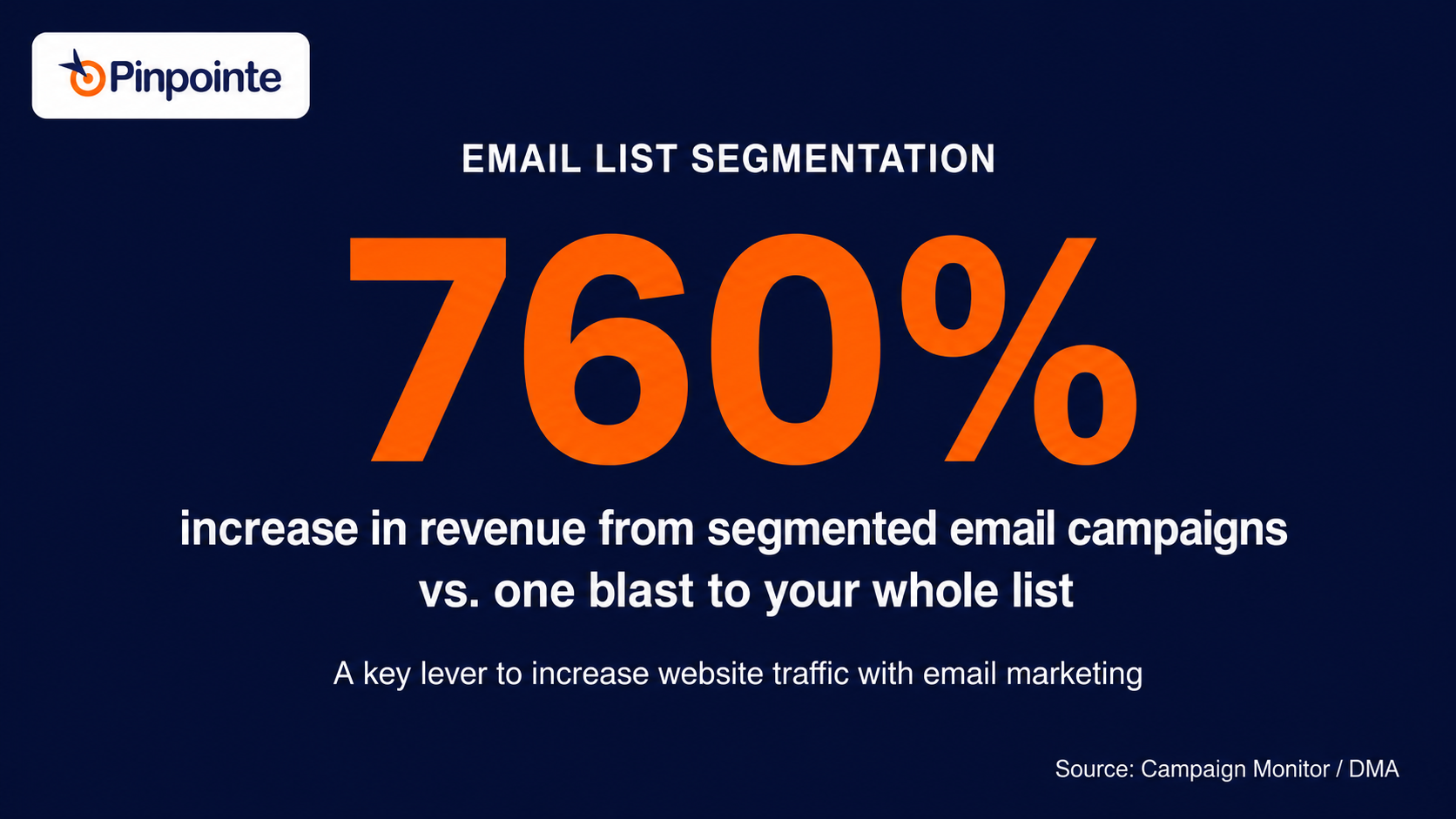
One widely cited industry study found that segmented email campaigns can drive a 760% increase in revenue compared to blasting one message to your entire list.
That number isn't really about revenue on its own. Revenue only happens after someone clicks through to your site first, which means email list segmentation is quietly one of the highest-leverage traffic levers you have, even before it turns into a sale.
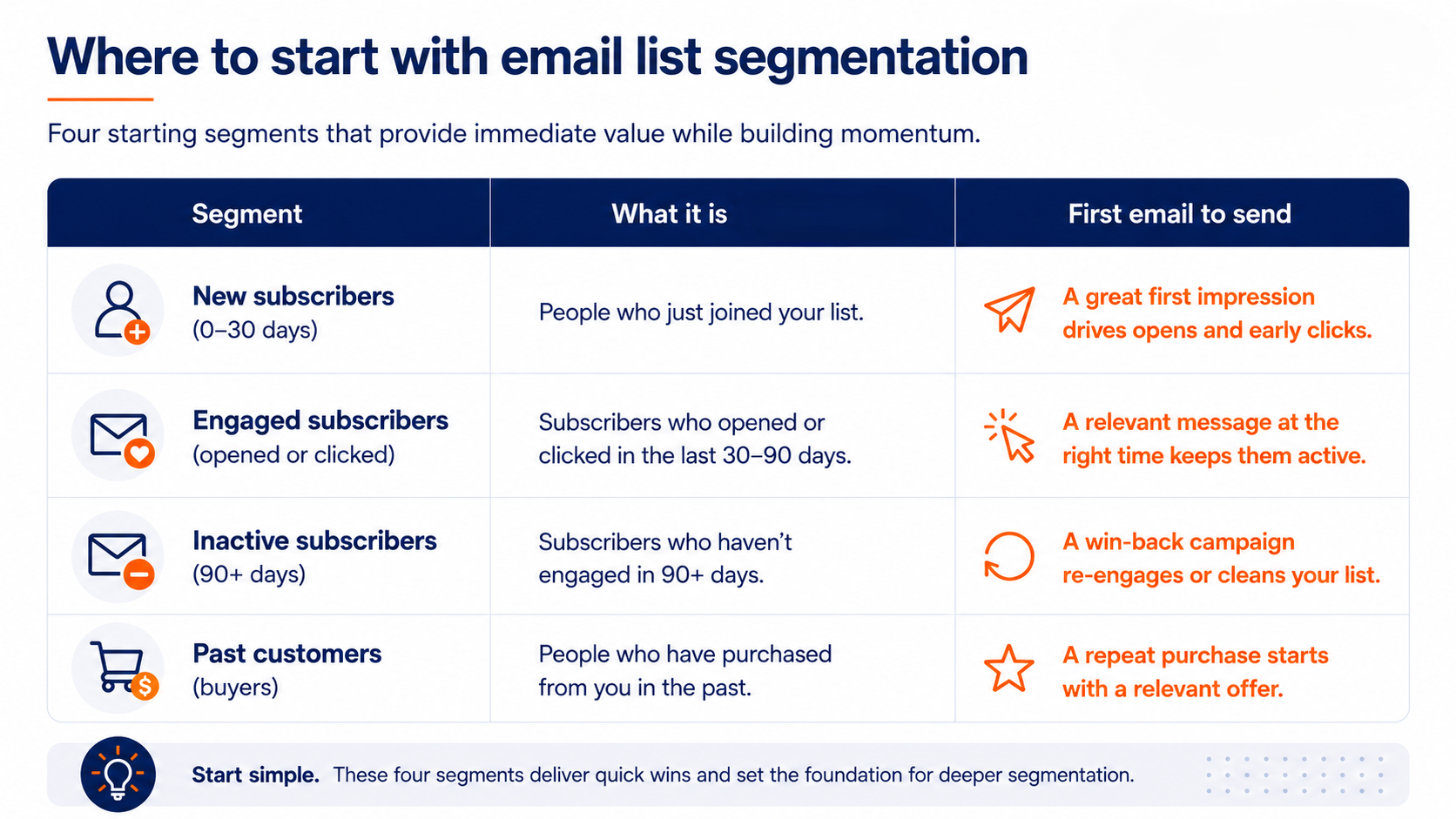
Here's a caption-worthy way to think about where to start segmenting your email list for better website traffic:
|
Segment |
What it tells you |
First email to send |
|
Recently active on your site |
They're already warm, just needs a nudge |
A specific offer tied to what they viewed |
|
Opened but never clicked |
Interested in the topic, not the CTA |
A different angle on the same subject |
|
Purchased before |
They trust you already |
A related product or upsell |
|
Never opened in 90+ days |
At risk of going cold |
A re-engagement send before you remove them |
You don't need twenty segments on day one. Pick the two rows above that match your business and build from there. Adding a third or fourth segment gets much easier once the first two are running.
Behavior beats demographics almost every time
Age, job title, and location tell you something. What someone actually clicked, viewed, or bought tells you a lot more. If two subscribers are both 35-year-old marketing managers in Chicago, that similarity won't tell you which one wants your pricing page and which one wants your blog.
Whenever you can, build segments off behavior first and demographics second. It's a better predictor of who's ready to click through to your site right now.
That doesn't mean demographic data is useless. It's just a weaker signal on its own. Layer it on top of behavior once you've got the behavioral segments running, and use it to fine-tune tone and offer rather than to decide who gets an email in the first place.
Watch Your Metrics And Let Testing Tell You What's Working
If your click-through rate is flat, guessing at a fix wastes time you don't have. Pull up your reporting dashboard and actually look at what your email marketing metrics show between the send and the click, not just the final number.
What to check when clicks are underperforming
Start with the email copy itself. A weak subject line kills opens, but a weak body kills clicks even when the open rate looks perfectly fine.
Then look at CTA placement and design. Sometimes the fix is as small as moving the button above the fold, changing one word, or making it visually distinct from the rest of the email.
Run one test at a time
Run split tests instead of guessing which version wins. Test one variable at a time, subject line, CTA copy, or send time, so you actually know what moved the number instead of stacking three changes at once and hoping.
It's tempting to redesign an entire email and call it a test. Resist that. A test that changes five things tells you nothing except that something in that pile of changes worked.
Don't stop measuring once someone clicks
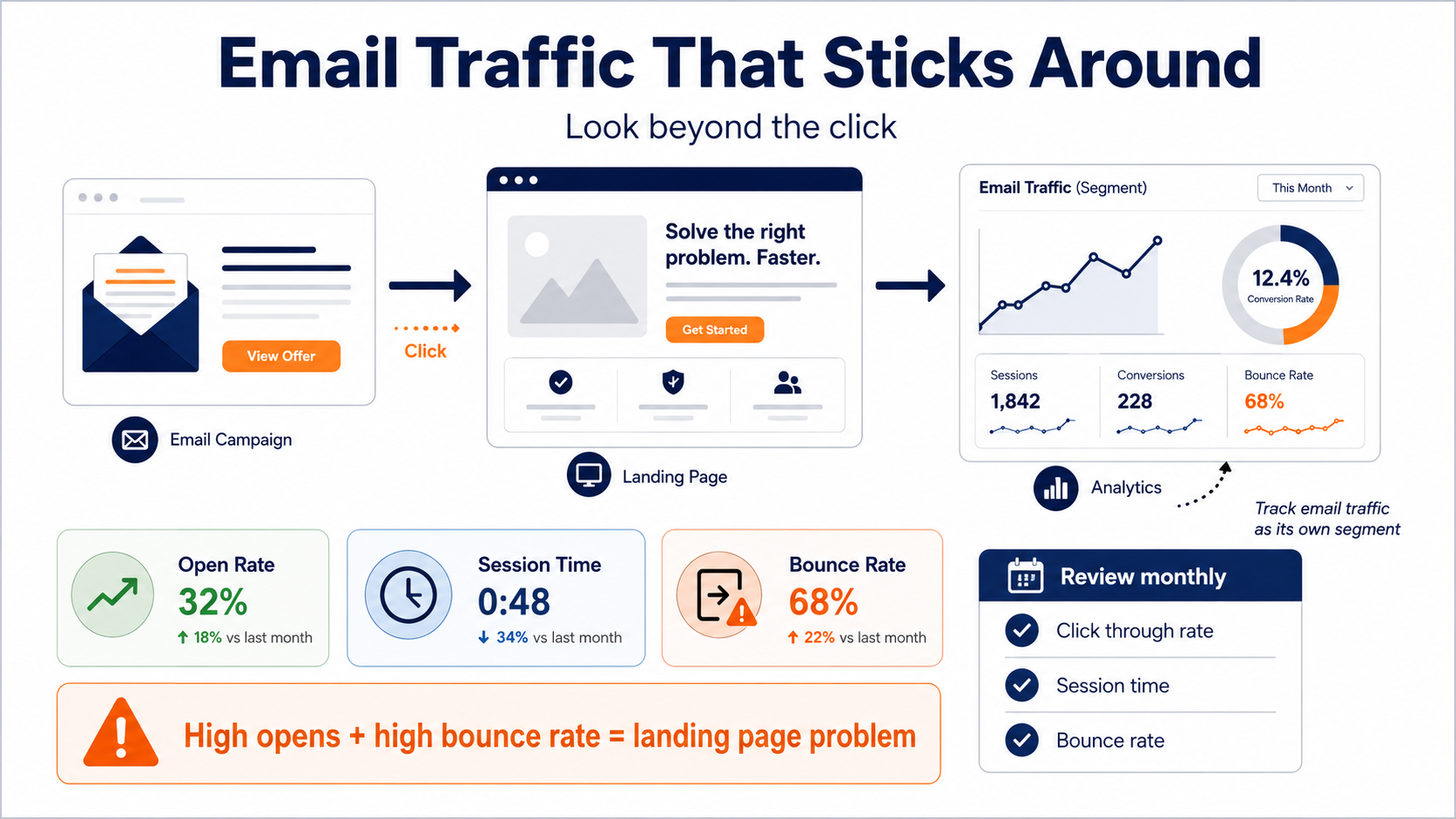
Website traffic from email doesn't end at the click. If you want to increase website traffic that actually sticks around, look at average session time and pages visited specifically for traffic that arrived from an email link, not your traffic as a whole lumped together.
If that segment bounces fast, the page is usually the culprit, not the email that sent them there. Bounce rate for email-driven visits will tell you more about your landing page than it will about your email copy.
A high open rate feeding a high bounce rate is a landing page problem wearing an email marketing costume. Don't spend another month rewriting subject lines when the actual leak is on the other side of the click.
Review your email marketing metrics on a set schedule, not just on the dashboard
Metrics that nobody schedules time to review don't change anything. Pick a day each month to actually sit down with click-through rate, session time, and bounce rate side by side, not just whichever one happens to be on your screen that week.
The pattern usually shows up fast once you're looking for it. A campaign with a strong open rate but a weak session time is telling you something specific, and it's rarely a subject line problem.
Let Email And Social Feed Each Other
Email and social aren't competing channels fighting for the same budget. Treated right, they reinforce each other, and both end up pushing more people to your site than either would alone.
Put your social icons somewhere visible in every email, not buried in a footer nobody scrolls to. Give subscribers an easy, obvious path from their inbox to wherever you're most active with your brand.
Send traffic the other direction too
The reverse works just as well. A subscriber who first opens your email on their phone and later reopens it from a desktop is 65% more likely to click through than someone who only opens it once.
People who circle back to revisit your content are your most engaged readers, whether that circling back happens across devices or across channels. That second look is a signal, not noise, and it's worth designing for.
Let one channel tease what the other delivers
Another strategy is to build entire campaigns specifically to push subscribers toward their social accounts instead of just their inbox. The real goal is total engaged traffic across every channel you have, and email is just one on-ramp among several that all deserve to point at each other.
A post on social that says “this week's email covers X” pulls people into your list. An email that says “see the full story on Instagram” pulls people the other way. Neither channel has to do all the work alone.
PRO TIP: Add one social follow prompt to your next campaign and track the click on that specific link separately from your main CTA. You'll find out fast whether your audience actually wants to follow you elsewhere or whether they're strictly here for the inbox relationship.
Borrow social proof for your emails, not just your ads
Reviews, tagged photos, and comments from social channels make excellent email content, and they carry a kind of trust a branded product shot never will. A subscriber trusts another customer's opinion more than they trust your copywriting, no matter how good that copywriting is.
Pull a handful of your best social mentions into a recurring email section instead of writing testimonial copy from scratch every time. It's less work for you, and it reads as more credible to the person deciding whether to click through.
Stop Guessing Which Email Actually Earned The Click
You don't need five separate tools bolted together to run all of this. If your goal is to increase website traffic in a way you can actually measure, you need list quality, matching landing pages, segmentation, and reporting living in the same place so you can see which piece is driving traffic and which one is dead weight.
Pinpointe's dynamic segmentation and split-test reporting exist to handle exactly this kind of tracking, so you're not stitching together spreadsheets to figure out which campaign actually moved your traffic.
If you're still sending the same email to your whole list and hoping the right people click, schedule a demo and let's find out what a segmented, tracked campaign could actually do for your site!