Mastering the Inbox: The Ultimate Blueprint for High-ROI Email Marketing
Let’s face it: your customers' inboxes are digital battlegrounds. Every single day, your audience is bombarded with dozens, if not hundreds, of promotional emails screaming for attention. So, how do you ensure your brand doesn’t end up instantly deleted or, worse, banished to the dreaded spam folder?
The secret isn't sending more emails; it’s sending smarter ones.
When done right, email marketing is an absolute powerhouse, boasting an average ROI of $42 for every $1 spent. But achieving that kind of success requires moving past the outdated "spray and pray" approach. It takes a strategic mix of data-driven personalization, flawless list hygiene, compelling copywriting, and robust automation.
Whether you are building a list from scratch or trying to revive flatlining open rates, this comprehensive guide breaks down the 10 essential pillars of a high-performing email marketing strategy.
1. Define your audience:
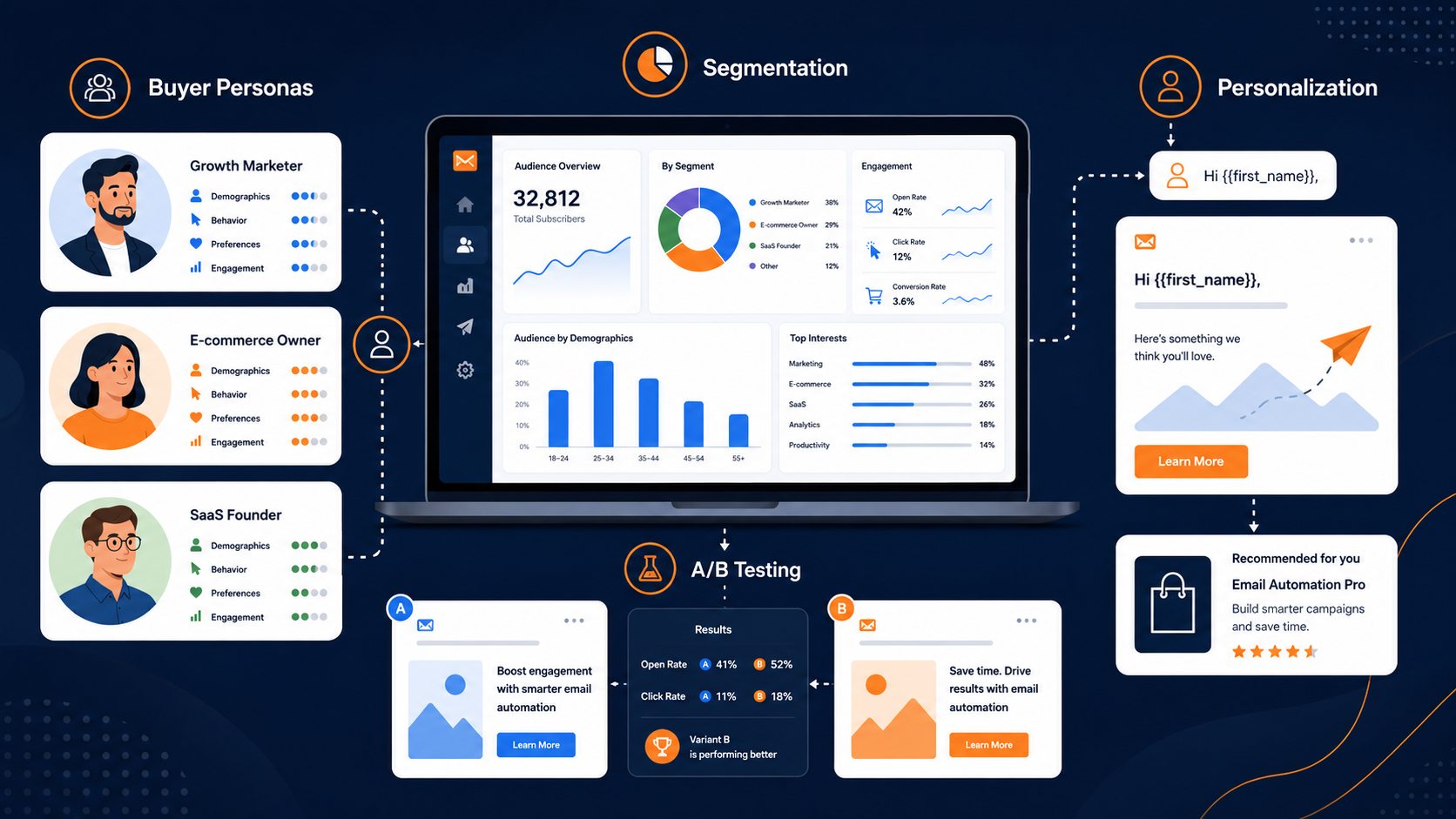
Identify your target audience and create buyer personas to understand their needs, preferences, and behaviors.
To define your audience, you need to know your current customers. Collect data on their demographics (age, gender, location, etc.), behavior (purchasing history, website activity, etc.), and preferences (product interests, communication channel preferences, etc.). Analyze this data to identify patterns and segments within your customer base.
Implement segmentation to enhance email marketing performance
Segmentation is dividing your customer base into smaller groups based on specific criteria, such as age, gender, location, or behavior. According to a survey by Mailchimp, segmented campaigns have a 14.31% higher open rate than non-segmented campaigns. Use your customer data to segment your email list and tailor your messages accordingly.
Use personalization to improve engagement
Personalization is using customer data to tailor your messages to each recipient. According to a study by Accenture, 91% of consumers are more likely to shop with brands that provide personalized offers and recommendations. Use your customer data to personalize your emails with the recipient's name, location, and product recommendations based on their interests.
Refine your messaging
Once you've defined your audience and created targeted campaigns, testing and refining your messages is important. Use A/B testing to experiment with different subject lines, email designs, and calls to action. Analyze the results to see what works best for each audience segment and refine your strategy accordingly.
2. Build a quality email list:
Collect emails from people who have opted in to receive your emails and regularly clean your list to remove inactive or invalid addresses.
According to a survey by HubSpot, companies that use opt-in forms have a 50% higher open rate and a 22% higher click-through rate than those that use purchased lists. Use opt-in forms on your website, social media pages, and in-store to collect email addresses from people interested in your brand.
Offer exclusive content
To encourage people to sign up for your email list, offer exclusive content, discounts, or freebies. According to a study by MarketingSherpa, 58% of people subscribe to email lists for deals or promotional content. Ensure the incentives you offer are relevant to your audience and align with your brand values.
Promote the value of your email list on social media
Use social media to promote your email list and encourage followers to sign up. According to a study by OptinMonster, social media is the second most effective way to generate leads after email marketing. Use targeted ads to reach people likely to be interested in your brand and use social media posts to promote your incentives.
Clean your list often to improve email marketing performance
Regularly clean your email list by removing inactive or unengaged subscribers. According to a survey by Return Path, the average email list contains 17.6% wrong addresses, which can hurt deliverability and open rates. Use email verification tools to check the validity of email addresses and remove any that bounce or are inactive.
Lead with value-based emails to improve list retention
Finally, to keep subscribers engaged and prevent them from unsubscribing, provide value in your emails. According to a study by Adestra, 74% of people expect brands to provide personalized content in their emails. Tailor your messages to your audience and provide relevant, interesting content that keeps them engaged.
3. Segment your list:
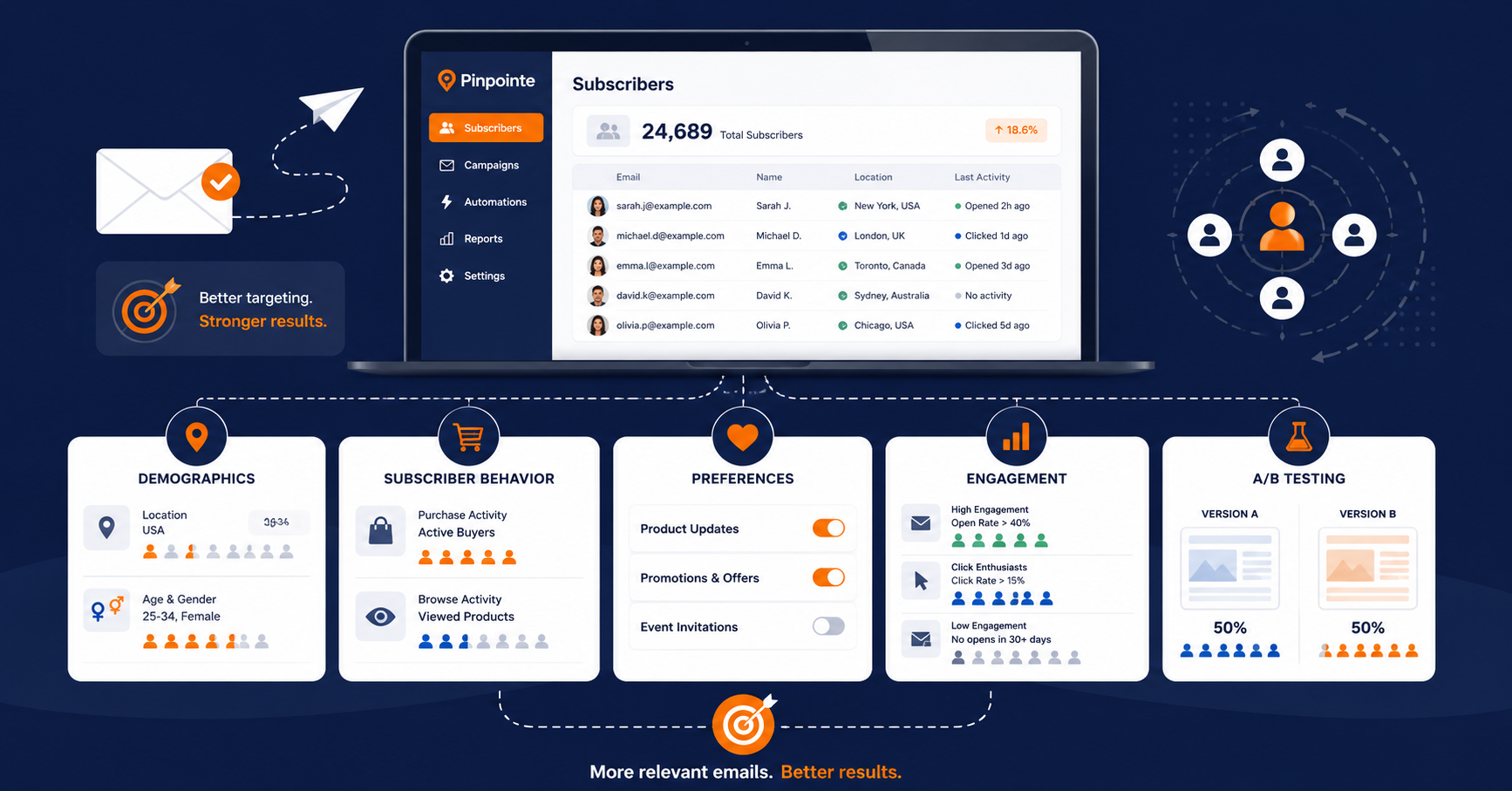
Divide your email list into smaller segments based on demographics, behavior, or preferences to send targeted and personalized messages.
Group your subscribers by demographic details such as age, gender, location, and income. According to a study by Mailchimp, segmented campaigns based on demographics have a 29.56% higher open rate and a 95.31% higher click-through rate than non-segmented campaigns.
Subscriber behavior is another segmentation strategy
Filter your audience based on subscriber actions, such as purchasing history, website activity, or email engagement. According to a study by Campaign Monitor, emails with personalized subject lines based on subscriber behavior have a 29% higher open rate and a 41% higher click-through rate than those without personalization.
Use subscriber preferences to optimize your email marketing performance
Organize your contacts according to their explicit preferences, such as communication channel choices, product interests, or content preferences. According to a study by Adestra, segmented campaigns based on subscriber preferences have a 101% higher click-through rate than non-segmented campaigns.
Subscriber engagement signals improve targeting
Leverage activity metrics to tailor your outreach, focusing on data like open and click-through rates or email frequency. According to a study by Mailjet, sending targeted campaigns based on subscriber engagement can lead to a 3x increase in revenue compared to non-targeted campaigns.
Refine your segmentation strategy with A/B testing
Finally, refine your segmentation strategy over time. Use A/B testing to experiment with different segments and messaging to see what works best for your audience. Analyze the results and refine your strategy accordingly.
4. Craft compelling subject lines:
Write subject lines that grab attention and encourage recipients to open your emails.
Litmus research shows that subscribers spend an average of 11.1 seconds scanning an email before deciding whether to open or delete it. Your subject line is the first thing they see, so it's essential to make a good first impression.
Your subject line may be the only reason your email is opened
Data from Campaign Monitor reveals that 33% of subscribers open emails based on the subject line alone. A strong subject line can significantly impact your open rates and ultimately, the success of your email campaign.
HubSpot reports that personalized subject lines have a 50% higher open rate than generic subject lines. Use subscriber data, such as their name or location, to create personalized subject lines that resonate with your audience.
Concise subject lines tend to have higher open rates
Findings from Litmus indicate that subject lines with 6-10 words have the highest open rates. Keep your subject lines short and to the point, and use clear and specific language that accurately reflects the content of your email.
Use A/B testing on subject lines to maximize email marketing performance
Mailchimp found that A/B testing subject lines can increase open rates by up to 49%. Test different subject lines and analyze the results to see what resonates best with your audience.
5. Create engaging content:
Create valuable and relevant content that resonates with your audience, whether educational, entertaining, or promotional.
Campaign Monitor reports that emails with images have a 42% higher click-through rate than those without. Use visual content such as images, infographics, and videos to make your emails more visually appealing and engaging.
Format your emails for easy skimming to improve click-through rates
Litmus research reveals that emails with a reading time of 3 minutes or less have the highest click-through rates. Keep your content concise and to the point, and use subheadings and bullet points to make it easier to skim.
Insights from Experian indicate that emails with personalized subject lines and content have a 29% higher open rate and a 41% higher click-through rate than those without. Use subscriber data, such as their name or location, to personalize your content and make it more relevant to their interests.
Personalize content based on past purchase behavior
HubSpot data shows that emails with personalized recommendations based on past purchases have a 29% higher open rate and a 41% higher click-through rate than those without. Provide valuable content such as product recommendations, exclusive offers, or educational resources to keep your subscribers engaged.
Overall, some key factors to boost engagement include keeping your email content concise and visual while using subscriber data to deliver highly personalized, relevant value.
| Strategy | Key Impact | Source | Actionable Tip |
| Integrate Visual Content | 42% higher click-through rate (CTR) compared to text-only emails. | Campaign Monitor | Include high-quality images, infographics, and videos. |
| Format for Quick Skimming | Highest CTR occurs with a reading time of 3 minutes or less. | Litmus | Keep copy concise. Use clear subheadings and bullet points. |
| Personalize Subject Lines & Copy | 29% higher open rate & 41% higher CTR. | Experian | Dynamically insert subscriber data like names or locations. |
| Leverage Past Purchase Behavior | 29% higher open rate & 41% higher CTR. | HubSpot | Deliver tailored product recommendations and exclusive offers. |
6. Use a clear and concise call-to-action (CTA):
Make it easy for recipients to take the desired action by including a clear and specific CTA in your emails.
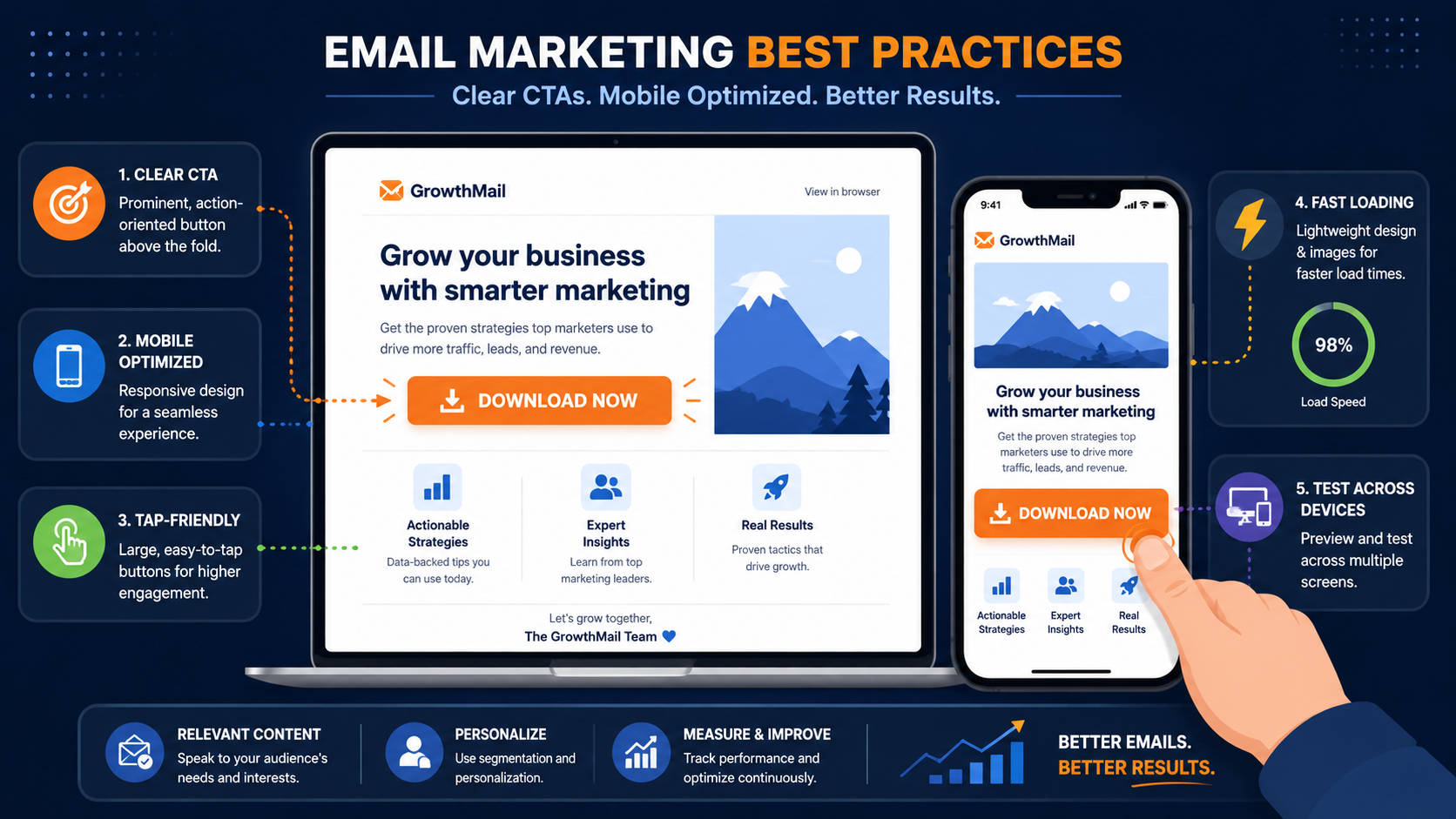
Use action-oriented language to make your buttons more compelling. Incorporate strong verbs such as "Shop," "Download," or "Register" to make the next step clear and actionable.
Less is more for crafting email CTAs
When it comes to length, less is more: Litmus research shows that CTAs with three words or less drive the highest click-through rates. Keep your copy short, punchy, and specific to the exact action you want your subscribers to take.
Design also plays a major role, so make sure your buttons visually stand out from the rest of the layout. Use a vibrant, contrasting color for your CTA button to instantly draw the reader's eye to it.
Place your CTA above the fold
Finally, keep your primary offer front and center. Data from Campaign Monitor reveals that placing your CTA above the fold can increase click-through rates by up to 70%, so position your main button in a prominent location near the top or middle of your email where it is easily visible without scrolling.
7. Optimize for mobile:
Ensure your emails are mobile-friendly and display appropriately on different devices and screen sizes.
Start with a responsive foundation. Litmus research shows that responsive emails have a 24 percent higher click-to-open rate than non-responsive layouts. Use a fluid design that automatically adjusts to any screen size so your content is always effortless to read and navigate.
Keep things simple when dealing with mobile devices
Simplicity is also key for smaller screens. Keep your formatting clean, use plenty of white space, and avoid tiny font sizes or overwhelming walls of text to make your layout easy to skim.
Pay close attention to your buttons as well. HubSpot data indicates that CTAs with a size of at least 44 by 44 pixels are more likely to be clicked on mobile devices, so make your buttons large and easy to tap with a thumb.
Optimize for fast loading times
Do not let slow loading times ruin the user experience either. Optimize all your images for mobile viewing by compressing the files and using the correct formats so they load instantly on cellular networks.
Because a massive portion of your audience checks their inbox on the go, never hit send blindly. Always preview and test your emails on multiple mobile devices before launching to ensure everything functions exactly as intended.
8. Test and measure:
Test different email elements such as subject lines, content, images, CTAs, and timing, and measure the performance of your emails using metrics such as open rate, click-through rate, and conversion rate.
Regularly experiment with different subject lines, body copy, images, and send times. Reviewing these micro-tests lets you see exactly what resonates best with your unique audience.
Benchmark your engagement
Data from Constant Contact indicates that the average click-through rate for email campaigns across all industries is 7.81 percent. Closely monitoring your own click-through rates will help you judge how effectively your content and CTAs are capturing attention.
Econsultancy research shows that email marketing boasts an average conversion rate of 4.24 percent, outperforming other major digital channels like social media and search. Measure your conversion rates consistently to see how many subscribers are taking meaningful steps, like making a purchase or filling out a form.
Monitor database health
Natural list decay happens to every business. Keep a close eye on your monthly list growth compared to your unsubscribe rates, using that information to adjust your content strategy and list-building tactics.
Tie your email efforts directly back to your high-level business objectives. Measuring your financial return allows you to see how your campaigns contribute to revenue and helps you optimize your long-term strategy.
9. Automate your email campaigns:
Use automation tools to send triggered emails, such as welcome emails, abandoned cart reminders, or birthday messages.
Experian research shows that welcome emails have an average open rate of 58.7 percent and a click-through rate of 14.4 percent, making them one of the most effective messages you can send. Automate your welcome sequence to deliver an instant, personalized greeting to new subscribers and start building a relationship from day one.
Recover lost revenue automatically.
Data from SaleCycle reveals that abandoned cart emails boast an average open rate of 45 percent and a 21.8 percent click-through rate. Set up automated cart reminders to nudge customers about items they left behind and gently encourage them to complete their purchase.
Email databases naturally see a large portion of users go quiet over time. Deploy automated re-engagement campaigns to win back these inactive contacts by offering them exclusive discounts, special incentives, or tailored product recommendations.
Guide prospects with multi-step drip campaigns.
Nurture your audience over time by delivering a strategic series of automated, sequential emails. This strategy works perfectly for onboarding new customers smoothly or educating cold leads with helpful resources.
Use your automation platform to dynamically personalize messages based on real-time subscriber behavior. Triggering emails based on past purchases, website activity, or specific demographic details ensures your content always feels relevant to the individual recipient.
10. Continuously improve:
Analyze your email marketing performance regularly and use the insights to refine your strategy, experiment with new tactics, and optimize your campaigns for better results.
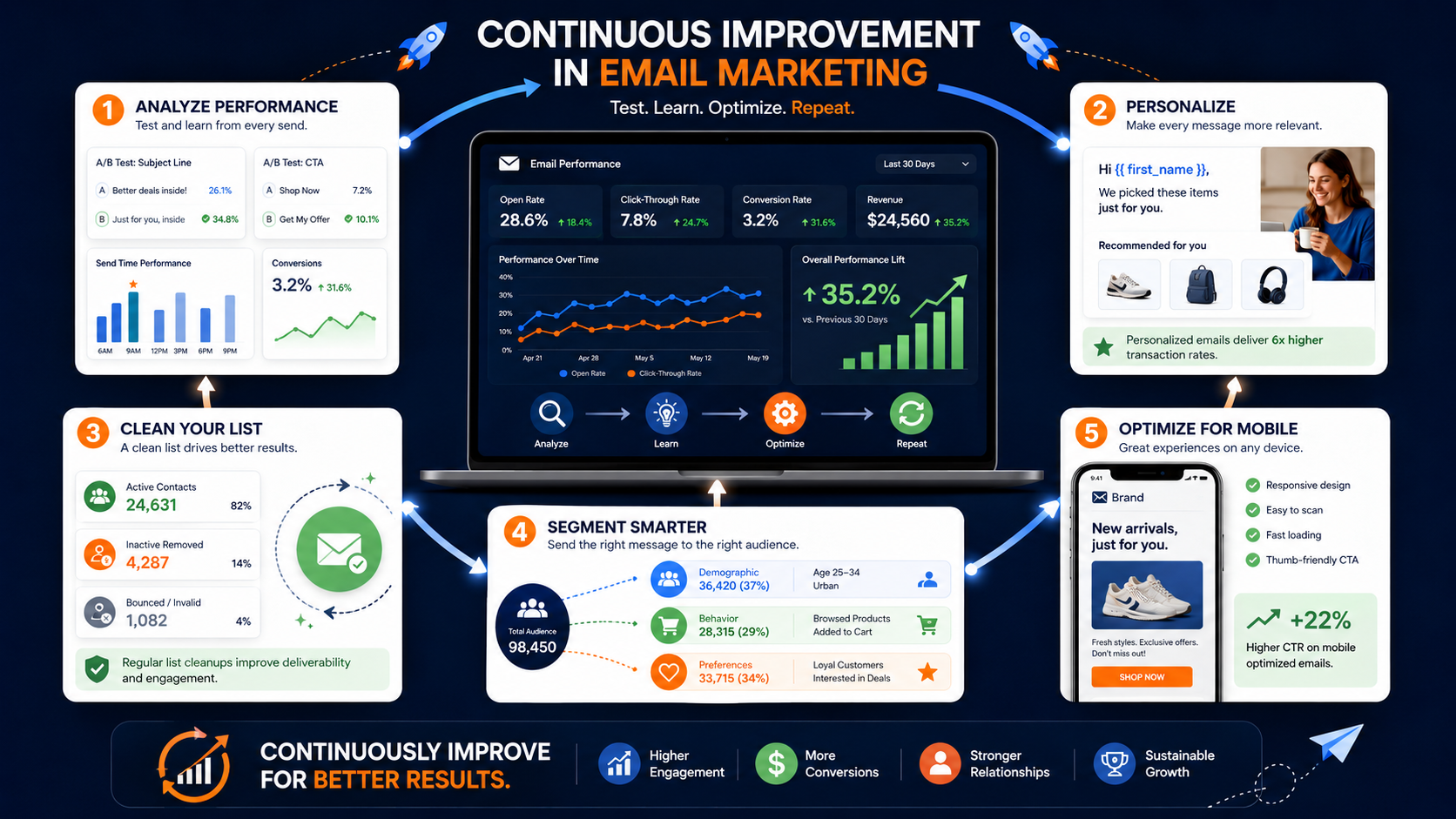
Consistently measuring different elements of your email campaigns, such as subject lines, body copy, CTAs, and send times, is crucial to understanding what resonates with your audience. Use this data to make informed decisions and constantly optimize your campaigns.
Double down on personalization.
Evergage reports that 88 percent of marketers see measurable improvements due to personalization, with more than half experiencing a lift greater than 10 percent. Continuously improve your tailoring tactics by collecting and analyzing subscriber data, such as individual preferences, behaviors, and demographic details.
Research from Return Path shows that 23 percent of email addresses in an average email list decay over the course of a single year. Protect your deliverability by regularly cleaning and updating your database, ensuring you only send messages to active and engaged contacts.
Refine your audience segmentation.
Enhance subscriber engagement by dividing your email list into specific sub-groups. Delivering highly relevant, tailored content based on past interactions ensures your messages remain valuable and highly anticipated.
Keep a close eye on how your layouts look on smaller screens. Always optimize your emails for mobile viewing by using a responsive framework and clear, easily scannable text so your audience can engage effortlessly on the go.
By committing to routine optimization, sharp personalization, and consistent list hygiene, you ensure your email strategy remains a highly profitable revenue driver for years to come.
Conclusion: Data-Driven Success Doesn't Happen by Accident
Maximizing your email marketing performance isn't a one-time project; it’s a continuous cycle of refining, testing, and automating. As the data shows, the brands that win the inbox are the ones that respect their audience's preferences, optimize for mobile, and leverage hyper-targeted segmentation. From the perfect 6-to-10-word subject line to automated behavioral drip campaigns, every single detail counts toward building trust and driving conversions.
By treating your email list as a dynamic asset and constantly analyzing your metrics, you can transform your email channel into a predictable revenue generator.
Ready to Turn Your Emails into a Revenue Engine?
Implementing all of these moving parts, from complex segmentation rules to automated behavioral triggers, can quickly become overwhelming. If you’re not sure whether your current tech stack, data tracking, or campaign workflows are actually set up to deliver maximum ROI, we're here to help.
Let our experts look under the hood. Schedule a complimentary Marketing Automation Audit with our team today. We’ll analyze your current setup, identify hidden bottlenecks, and provide a clear, actionable roadmap to skyrocket your open rates and conversions.