You've probably shipped a campaign that tried to talk to everyone. It landed with no one.
That's not a copy problem. It's what happens when a campaign skips the planning most marketers treat as optional: the unglamorous work of deciding who you're talking to, what you want them to do, and which channel earns the right to reach them.
How To Build A Digital Marketing Campaign Strategy
This is the digital marketing campaign strategy walkthrough I wish someone had handed me years ago, the one that actually answers how to build a marketing campaign instead of just listing tactics. No fluff, no theory. Just the sequence that turns a vague idea into a campaign that actually moves numbers.
You don't need a bigger team or a bigger budget to run this well. You need a real omnichannel marketing strategy and the discipline to follow the steps in order, before you write a single subject line.
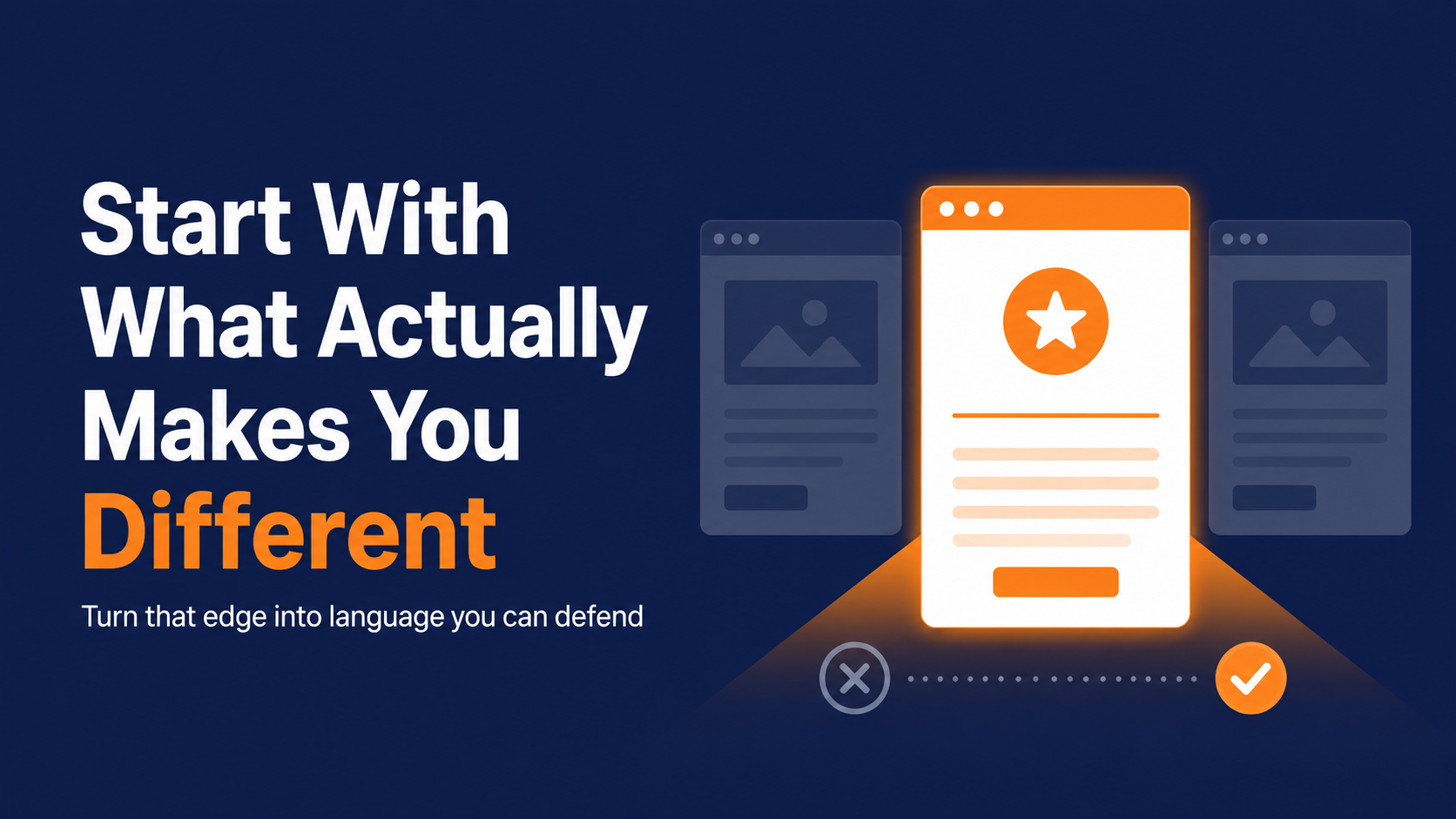
Name the thing you do better than the next option
Every campaign brief starts the same way: "we need more leads." That's a symptom, not a strategy.
Before you touch a subject line or a send calendar, name the one thing your product or service does that a prospect can't get anywhere else. Not your mission statement. Not a list of features. The actual, specific edge.
If you can't say it in one sentence, your audience won't be able to either.
Turn that edge into language you can defend
Once you've named it, write it down as a sentence you'd say out loud to a customer, not a line you'd put on a slide. "We get your invoices paid three weeks faster" beats "streamlined AR solutions" every time.
This sentence becomes the spine of the campaign. Every email, every text, every landing page traces back to it. If a piece of content doesn't reinforce that sentence, cut it.
Test the sentence against what your competitors already say
Pull up the homepages of your three closest competitors. If your differentiation sentence could sit on any of their sites without anyone noticing, it's not differentiation. It's category language.
Real differentiation makes a specific claim a competitor either can't make or hasn't bothered to. That specificity is uncomfortable, and that's exactly why it works. Vague claims are safe and forgettable. Specific ones get remembered.
Build Your Digital Marketing Campaign Strategy Around One Goal
A campaign with four goals is a campaign with zero goals. Lead generation, brand awareness, list growth, and reactivation all require different sequencing, different cadence, and different metrics.
Pick the one that matters most right now. Everything else in the campaign gets built around that single number.
Skip the goals that just sound good in a meeting
"Increase engagement" isn't a goal. It's a vibe. A real goal has a number and a date attached: 400 qualified leads by the end of the quarter, or a 15% lift in reactivated subscribers in 60 days.
Marketers who run generic, one-size-fits-all campaigns are more common than you'd think. A recent survey of nearly 4,500 marketing leaders found that 84% admit to running generic campaigns even after adopting AI tools meant to personalize them.
Vague goals are usually the root cause. If you can't measure it, you can't tell whether the campaign worked, and neither can anyone you answer to.
Match your goal to the shape of the campaign
A lead-generation goal and a reactivation goal don't run the same way. Lead gen usually means a shorter, punchier sequence aimed at people who've never heard from you. Reactivation means a longer, more patient sequence aimed at people who used to pay attention and stopped.
Decide which shape you're building before you write a single subject line. A reactivation campaign dressed up like a cold lead-gen push will feel off to the exact people you're trying to win back.
Build a person, not a demographic slice
"Marketing managers at mid-size companies" isn't an audience. It's a job title. Go further: what are they trying to avoid this quarter? What tool did they just get burned by? What does a good week look like for them?
You're not writing to a segment. You're writing to a specific person having a specific week. That shift changes everything about the words you choose.
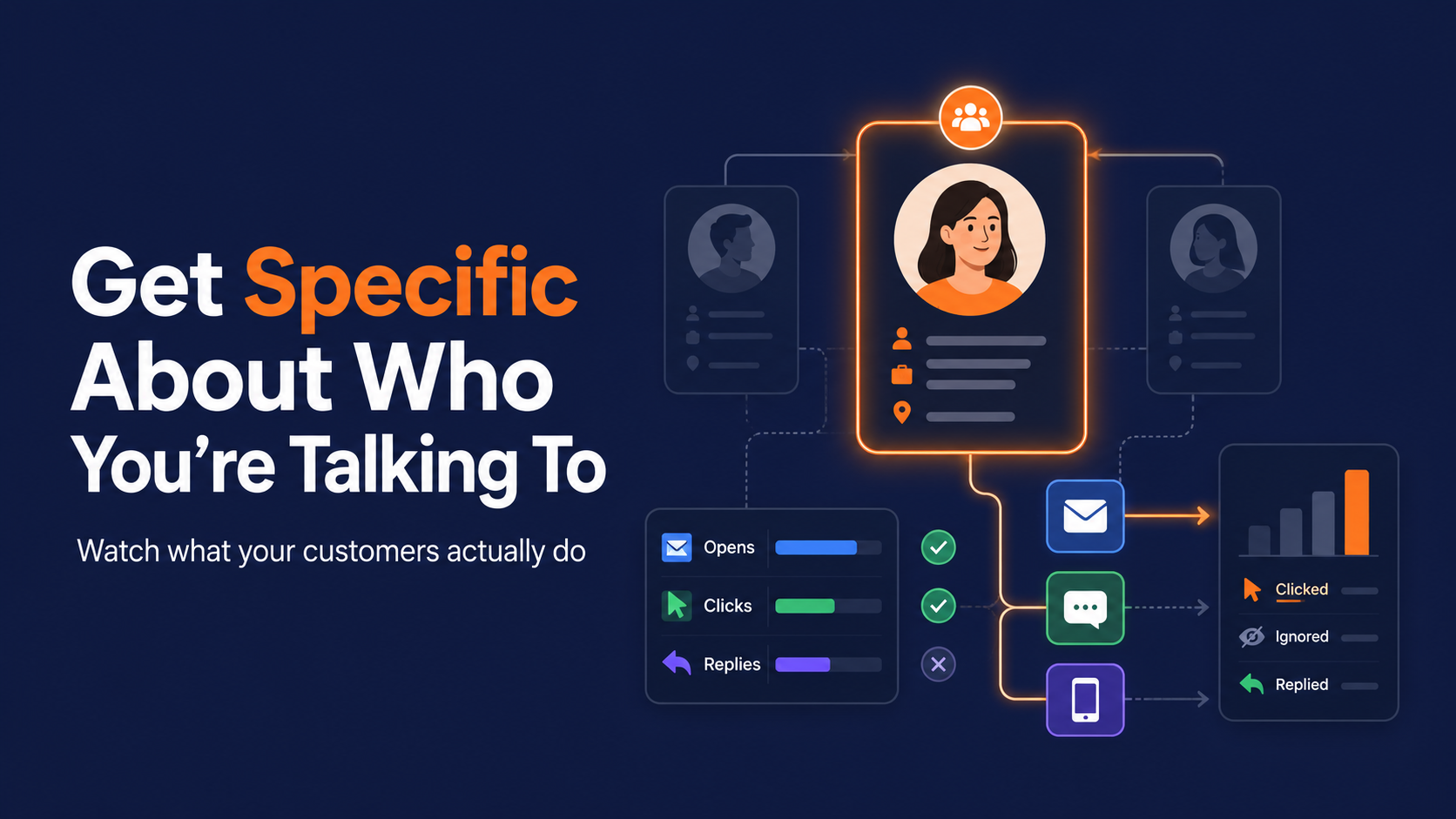
Watch what your customers actually do, not what you assume
Guessing at audience behavior is expensive. Marketers who take the time to research their audience and their actual behaviors see it pay off directly: teams that do this kind of research are far more likely to see personalization make a real, measurable difference in how their audience engages.
Pull up your existing customer list. Look at what they clicked, what they ignored, and what they bought right after opening a specific email. That data tells you more than any persona template ever will.
Find out where they're already paying attention
Knowing who your audience is only helps if you also know where they're spending their time before they ever land on your campaign. Some of your audience lives in their inbox first thing in the morning. Others barely glance at email but respond to a text within minutes.
You don't need a big research budget to figure this out. Look at your own send data: which channel gets opened fastest, which one gets ignored, which one gets an actual reply.
That's your answer, and it's sitting in a report you probably already have access to.
Build an Omnichannel Marketing Strategy Across Email and SMS
Email marketing remains the workhorse of most campaigns, and for good reason: it's still the channel where you own the relationship end to end. It's where longer-form storytelling and product education actually land.
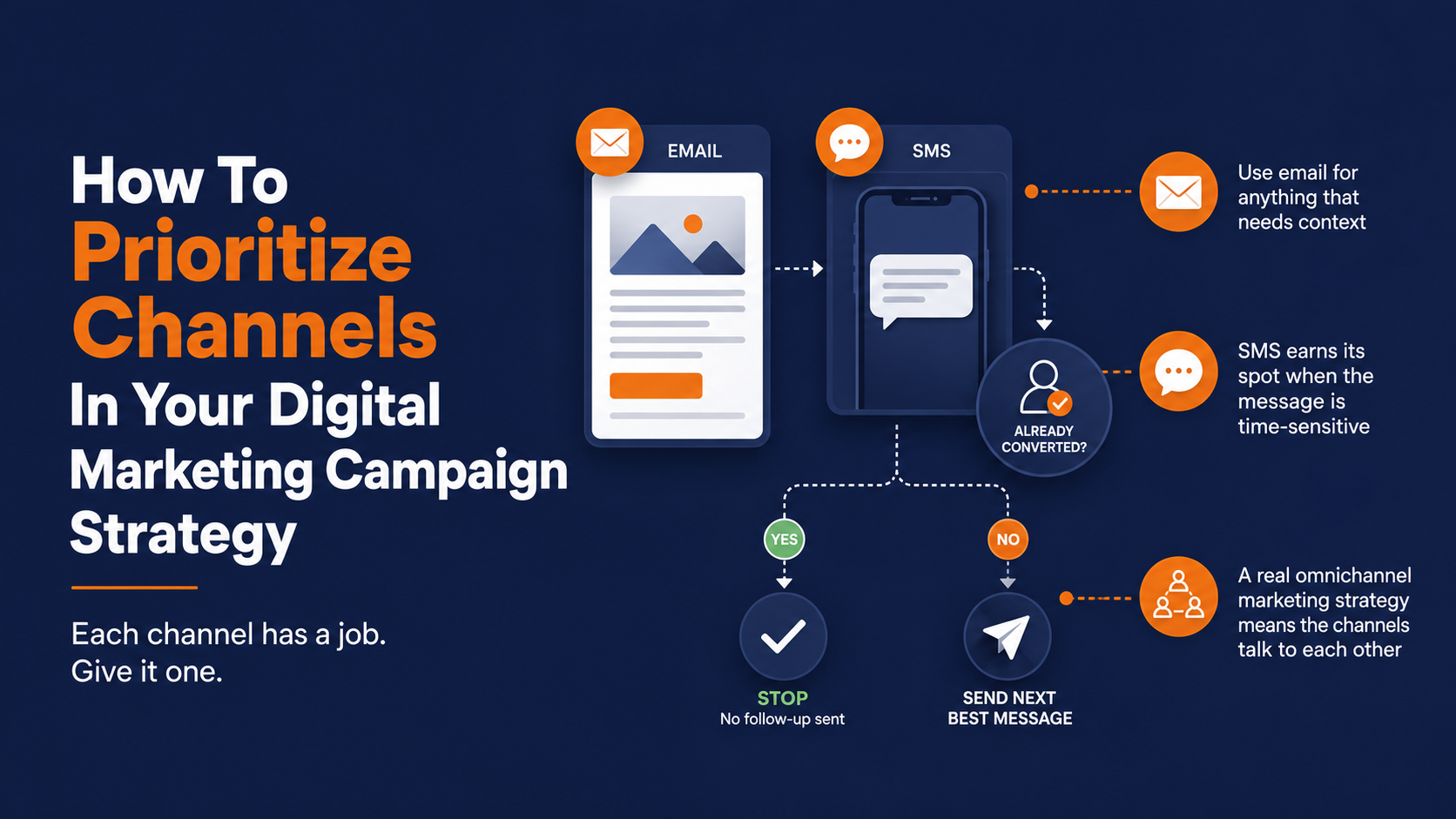
Use email for anything that needs context. A product launch, a case study, a nurture sequence that walks someone from curious to convinced. Email gives you the room to make the case.
SMS earns its spot when the message is time-sensitive
Text doesn't replace email. It complements it, and only when timing genuinely matters. A cart that's about to be abandoned, a flash sale closing in an hour, a reminder that a demo starts in fifteen minutes.
Shoppers aren't opposed to hearing from you more often on SMS. They're opposed to hearing from you when it isn't relevant. 65% of shoppers are open to receiving messages more frequently as long as brands make those messages worth opening. Frequency isn't the problem. Relevance is.
What an omnichannel marketing strategy actually requires
"Omni-channel" gets thrown around like it just means "we use more than one channel." It doesn't. A real omnichannel marketing strategy means the channels talk to each other, so a customer who already clicked through on email doesn't get a text an hour later pushing the same offer as if nothing happened.
Write out the actual sequence before you launch: what triggers the email, what triggers the SMS follow-up, and what stops both if the person already converted. If you can't draw that sequence on a whiteboard in under a minute, it's not a sequence yet.
Stop treating every channel like it deserves the same message
Copying an email into a text with the character count trimmed down isn't a strategy. Each channel has a job. Give it one.
|
Channel |
Best for |
Avoid using it for |
|
|
Storytelling, education, nurture sequences |
Urgent, time-sensitive alerts |
|
SMS |
Time-sensitive nudges, cart recovery, event reminders |
Long-form product education |
|
Omni-channel sequence |
Guiding one customer across both, in order |
Sending the same message on both at the same time |
Segment Before You Personalize Anything
Segmentation feels like it needs to be complicated to work. It doesn't. Start with three groups based on where someone is in the relationship with you: new, engaged, and gone quiet. You can get more granular later, once you've proven the basic split moves the needle.
Why a customer segmentation strategy starts with behavior, not guesses
The data on this is about as clear as it gets in marketing. More than 90% of marketers say segmentation directly boosts their email performance, and it's consistently ranked as the single most effective personalization tactic available, ahead of dynamic content or subject line tricks.
Segment by what people actually did: opened the last three emails, clicked a specific link, bought once and never came back. That's the foundation of any customer segmentation strategy: real behavior, not assumptions.
Behavior beats guesswork every time, and it's the input your automation actually needs to trigger the right next message.
Add personalization only after the segments prove themselves
It's tempting to jump straight to dynamic content, personalized subject lines, and individually tailored offers. Hold off. Personalization built on top of a shaky segmentation structure just personalizes the wrong message to the wrong group faster.
Prove that your three basic segments perform differently first. Once you can see the gap between how your "engaged" group and your "gone quiet" group respond, you'll know exactly where personalization is worth the extra effort and where it's wasted polish.
Decide How You'll Know the Campaign Actually Worked
Remember the single goal you chose at the start. Every metric you track during the campaign should connect back to that number, not to whatever's easiest to pull from a dashboard.
If your goal was qualified leads, open rate is a supporting metric, not the scoreboard. It tells you whether the subject line worked. It doesn't tell you whether the campaign did.
Build the reporting view before launch, not after
Set up the report you'll actually check before the first message goes out. Waiting until week three to figure out how to pull the numbers means you're reconstructing performance from memory instead of watching it happen in real time.
This sounds obvious. It's also the step most campaigns skip, because building the plan feels more urgent than building the way you'll judge the plan. Both matter equally.
How to build a marketing campaign timeline you'll actually follow
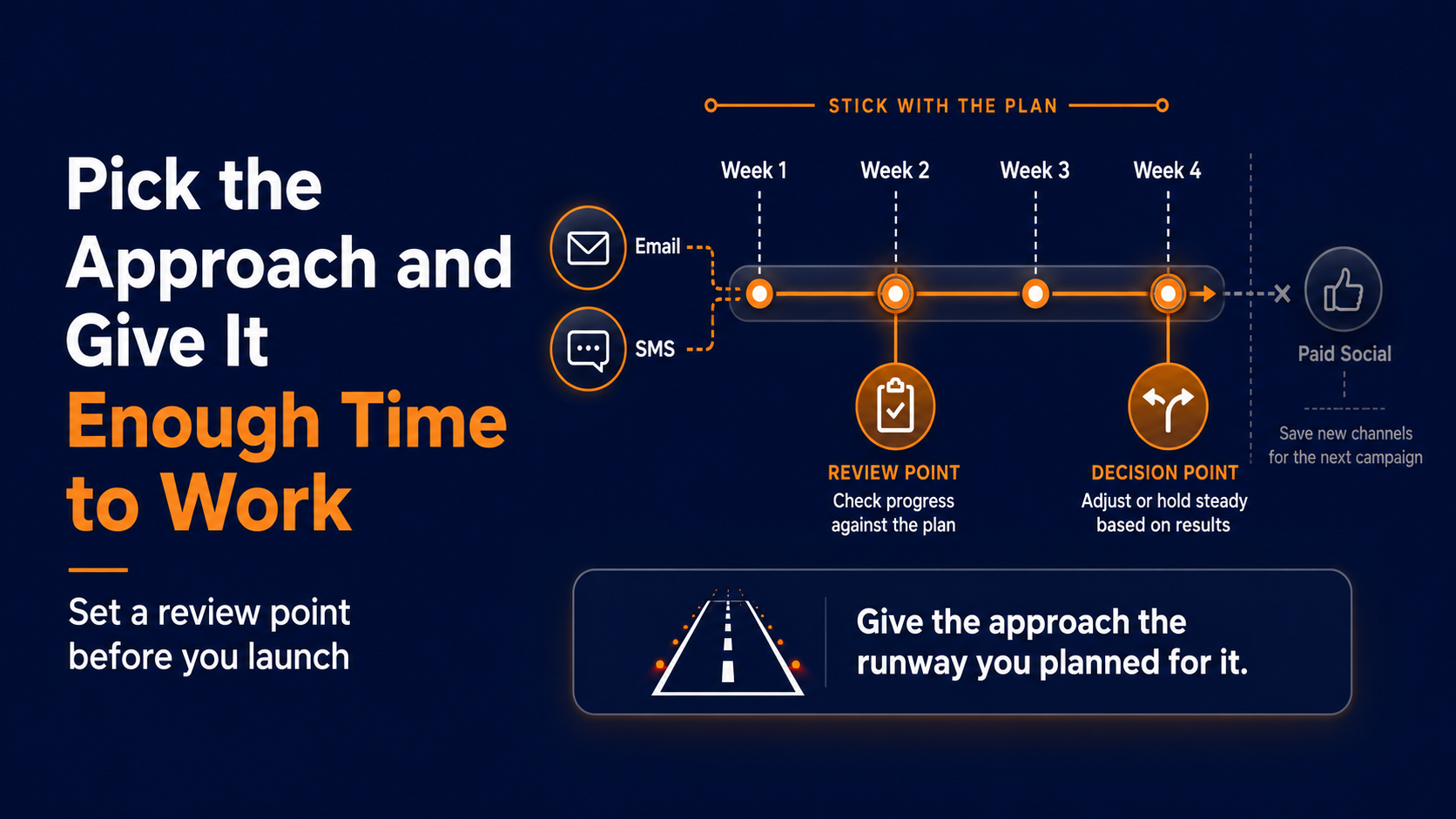
Content marketing, paid social, an email and SMS nurture sequence, whatever you pick, commit to it for the length of the campaign. Switching lanes halfway through because the first week looked slow is how good strategies get killed before they've had a chance to work.
Most sequences need more than a few days to show their real numbers. An email nurture that runs over three weeks won't tell you much on day four, and neither will an SMS win-back flow you check after a single send. Give the approach the runway you planned for it before you decide it isn't working.
Set a review point before you launch, not after
Decide now when you'll actually look at the numbers. Two weeks in, pull the data. Four weeks in, decide whether to adjust or hold steady.
Building that checkpoint into the plan up front keeps you from making panicked changes off day-three data.
Resist adding a fourth channel mid-campaign
Halfway through a campaign, it's tempting to bolt on a paid social push or a new channel because someone in a meeting suggested it. Don't.
A campaign that was built around email and SMS working together doesn't automatically get better by adding a third moving part with no plan for how it fits.
If a new channel genuinely deserves a spot, that's a decision for the next campaign, made with the same care you gave this one. Not a mid-flight addition made under pressure.
Where Your Digital Marketing Campaign Strategy Actually Runs
Everything above is the thinking. Pinpointe is where that thinking turns into a running campaign instead of a plan sitting in a shared doc.
That's what email and SMS marketing automation is supposed to do: run the sequence you designed without someone manually pulling levers every day.
One platform for email and SMS marketing automation
Once you've decided email carries the story and SMS carries the urgency, you need a way to actually run both without juggling two logins and two sets of customer data.
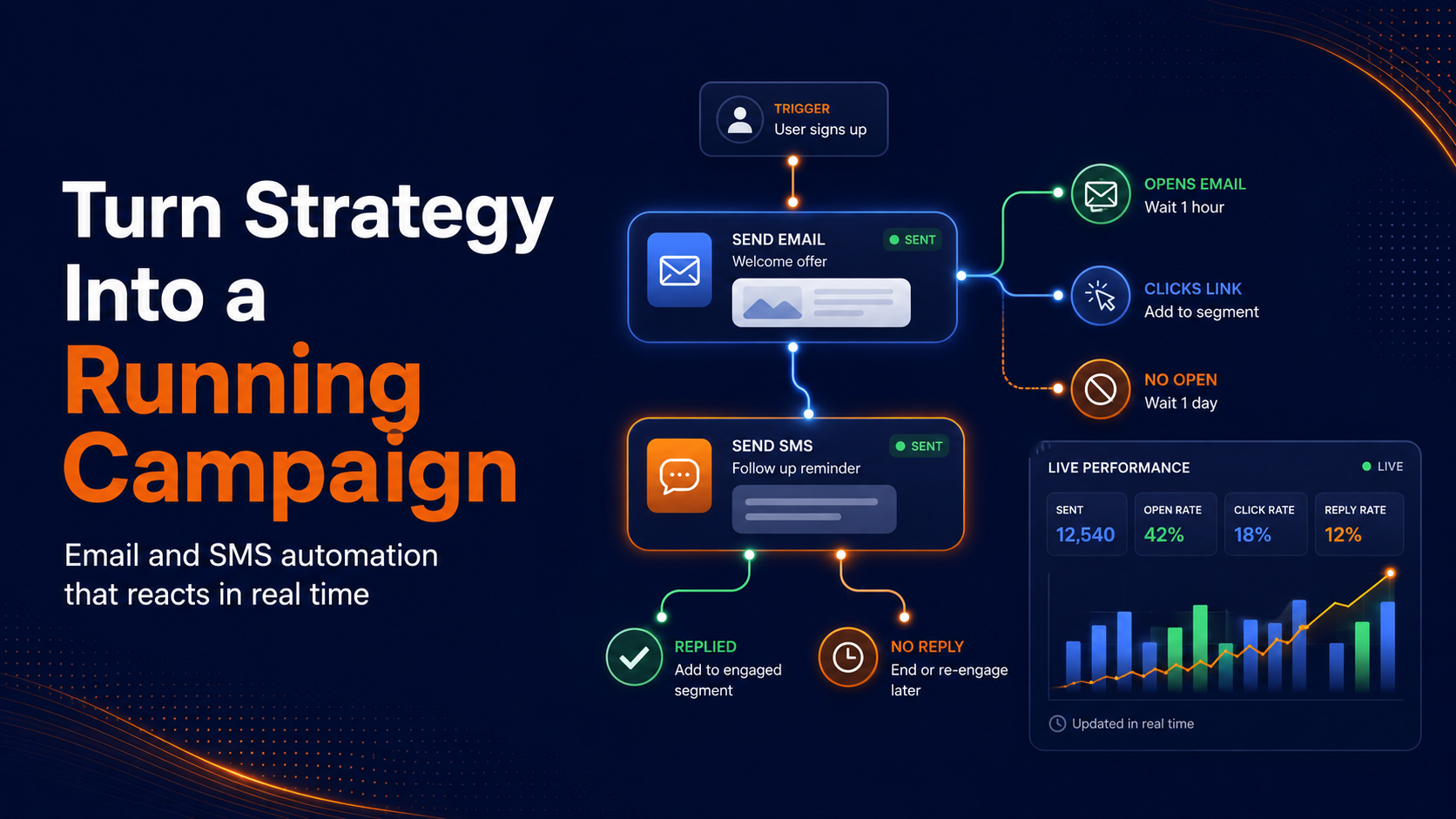
Pinpointe's omni-channel journey builder lets you map that exact sequence: email first, SMS as a follow-up nudge, both pulling from the same customer record so nobody gets a text about something they already bought after opening the email.
Running Your Digital Marketing Campaign Strategy on Autopilot
The segmentation you just built based on real behavior only works if your platform can act on that behavior in real time.
Pinpointe's dynamic segmentation and behavioral triggers watch for the actions you defined, someone opens three emails in a row, someone clicks but doesn't convert, and automatically move that person into the next message in the sequence.
You built the logic. Pinpointe runs it, continuously, without someone manually pulling lists every Monday morning.
That's the difference between a campaign you build once and hope holds up, and one that adjusts itself as real customers behave in real ways.
Real-time engagement data instead of a monthly report you build by hand
The reporting view you set up before launch only stays useful if the data behind it updates as customers act, not once a month when someone has time to pull a spreadsheet together.
Pinpointe's real-time engagement data means you can check the metric tied to your one goal on day three, not week three, and adjust the sequence while the campaign is still running instead of after it's already over.
That's the whole point of building the plan this carefully in the first place: so the campaign can actually respond to what real people do, instead of running on autopilot until someone remembers to check.
Your Next Campaign Doesn't Have to Start From a Blank Page
Most campaigns don't fail because the idea was bad. They fail because nobody sat down and did the unglamorous work first: naming the real edge, picking one goal, getting specific about the audience, matching the channel to the behavior, and giving the whole thing room to actually run.
Optimizing your digital marketing campaign strategy doesn't always mean adding more budget
None of that takes a bigger budget. It takes an hour with a blank doc and the discipline to skip the shortcuts that feel productive but aren't.
Every step in this walkthrough costs time and attention, not ad spend, which means the only real barrier is whether you sit down and do it before the next campaign brief lands on your desk.
Still confused on how to build a marketing campaign?
The marketers who consistently get better results aren't running more campaigns than everyone else. They're running fewer, more deliberate ones, built on a real edge, a single goal, and a sequence that respects how their audience actually behaves.
If you'd rather have someone look at what you've already got running and tell you where it's leaking, that's a conversation worth having before you build the next one from scratch. It's usually faster to fix the sequence you have than to start over completely.
Ready to See Where Your Current Campaigns Are Leaking?
Schedule a marketing automation audit with Pinpointe, and we'll walk through your existing email and SMS setup together, segment by segment, to find exactly where a tighter sequence would convert more of the audience you've already earned.