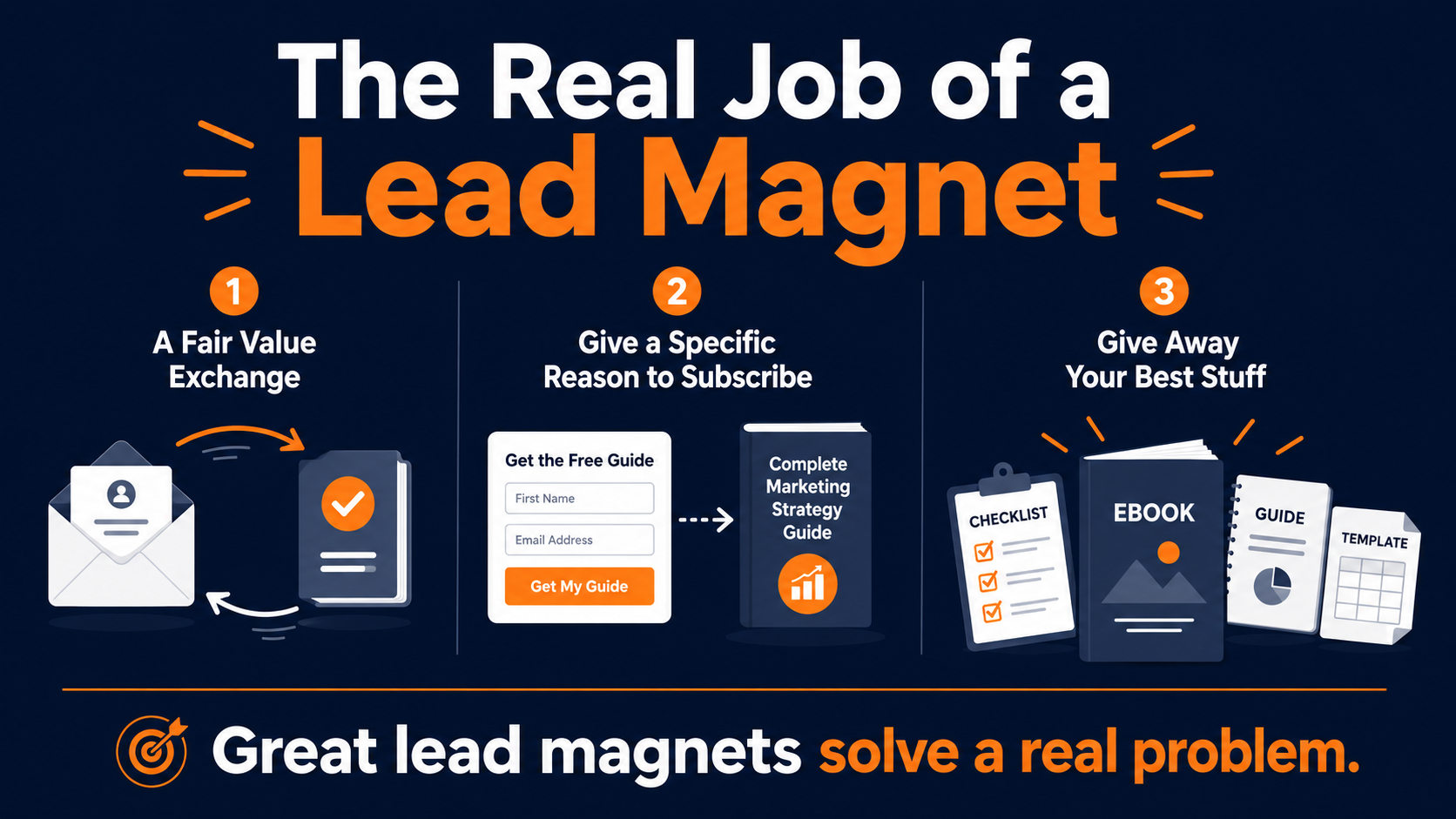
Getting someone to hand over their email is harder than it's ever been. Newsletters are everywhere, inboxes are crowded, and nobody signs up for “updates” anymore. So the smart move is a trade. You give away something truly useful, and in return you earn a way to reach that person again.
That trade only works when what you give away is good. Not all lead magnets are equal. The goal is to amaze people with what you hand out for free and to make it so useful that they can't wait to see what you sell. Every idea below focuses that goal so you can maximize the growth of your email list.
Why People Actually Hand Over Their Email
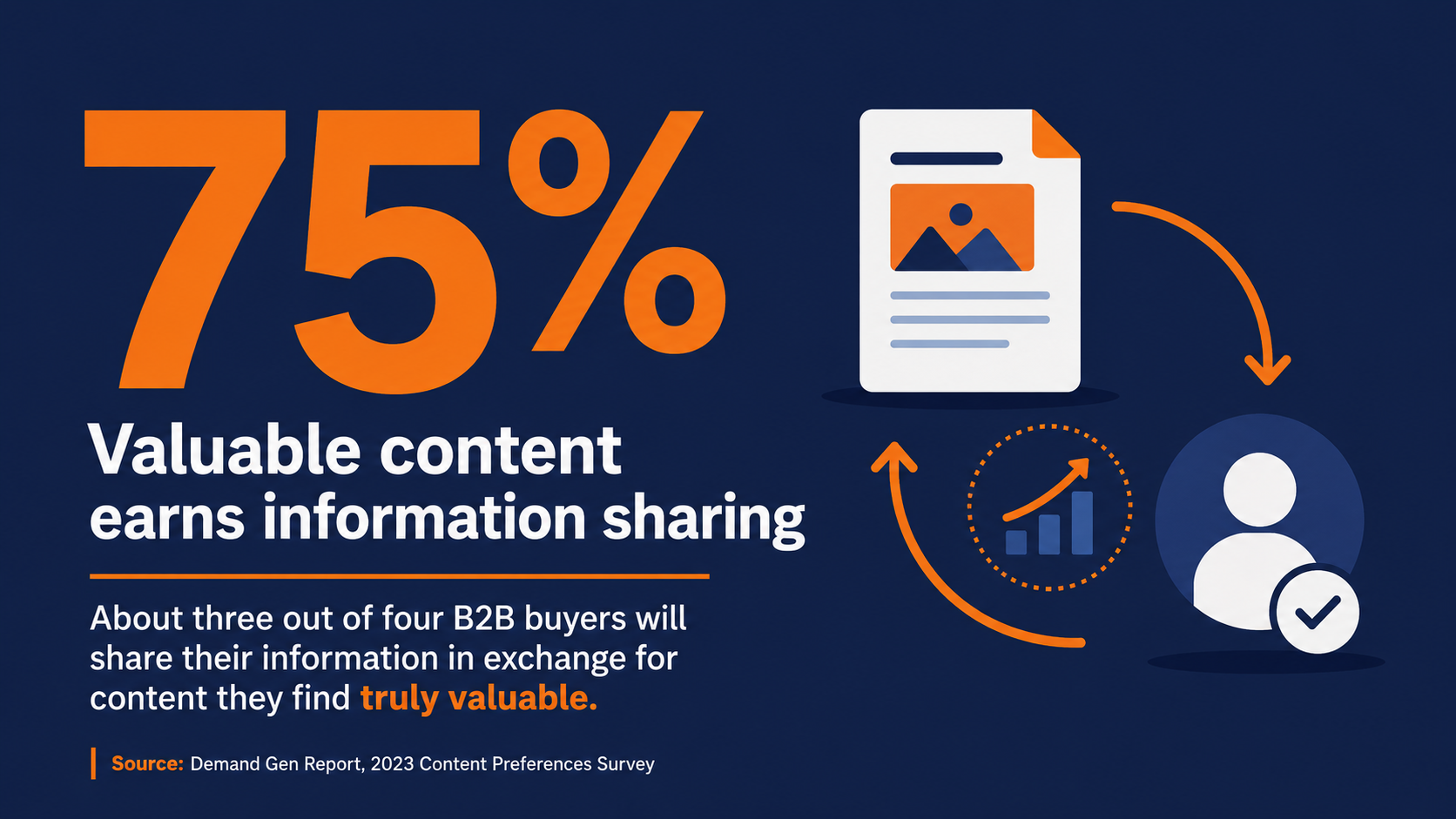
The instinct to trade contact info for something useful is alive and well. Roughly three-quarters of B2B buyers will share information about themselves in exchange for content they find truly valuable. The willingness is there. What most offers lack is the “truly valuable” part.
Offering something of actual value is where most lead magnets fail. A repackaged blog post doesn't earn a signup. A simple ebook promising ten tips everyone has read before doesn't either. The exchange only works when what you're giving away is good enough that people would feel lucky to get it for free.
Solve one specific problem, not a broad topic
The fastest way to make a lead magnet forgettable is to make it about a topic instead of a problem. “A Guide to Email Marketing” is a topic. “The Three Subject Line Fixes That Stopped My Open Rates From Sliding” is a problem with a promise attached. Specific offers may pull fewer total signups, but they pull dramatically better ones.
Someone who downloads a narrow, pointed resource has told you exactly what they're wrestling with, which makes every follow-up email you send afterward easier to write and more likely to land. Keep that in mind as you read the twelve formats below. The format matters far less than how you tailor the follow-up afterward.
Education-First Lead Magnet Ideas
The first group of lead magnet ideas all teach something. They work for email list building because they give the reader a small win up front and prove you know your subject, which is exactly the impression that turns a stranger into a subscriber.
E-courses
Don't deliver another ebook promising X solutions to Y problems. Everybody's seen too many of those to get excited about one more. Instead, offer a multi-episode course with video, worksheets, and action steps, delivered automatically as part of your onboarding sequence.
Build it to solve a problem, then title and position it around that problem rather than around general information. Outline precisely how to make progress when someone is stuck and frustrated.
You capture the reader's emotions by offering relief, and you impress them with the quality of what you know. A course spread over several days also does something a single download can't. This works well because it earns a week of attention before you've asked for anything.
Manifestos
A manifesto is a detailed, emotionally driven but fact-grounded expression of your principles and beliefs. It should inspire trust by showing prospective clients that your company's values and goals line up with their own.
Keep it reasonably long, somewhere between 3,000 and 10,000 words, and produce it as a PDF or ebook. You could even record a 10 to 15 minute video if you're comfortable on camera.
Manifestos usually attract fewer leads than other offers, and the leads they attract tend to be higher quality. These are people looking for a company whose values match theirs, and they often become not just customers but genuine advocates for your brand.
Contests
Capitalize on how naturally competitive people are by running a contest around your content. Set a task for the public that also benefits your marketing, whether that's referring new signups or sharing specific posts. Whatever you ask, make the requirements clearly defined, easy to track, and bound by a specific time limit.
At the end, tally the results and declare a winner, usually whoever performed the task most often or most effectively. Make the prize impressive. If you're picking one winner or just a few, a physical object mailed to their door carries more weight than one more digital file in a world already full of them.
Drawings
A drawing works like a contest, except you don't pick a winner based on direct performance. For every action someone takes, they earn a virtual ticket in a pool you draw from at the end.
Everything true of contests applies here too. Define the tasks clearly, make them easy to track, and set a firm deadline. Be transparent when it's time to draw so nobody can cry favoritism. And where you can, make the prize something tangible, since the perceived value of a physical reward is what pulls people in.
Lead Magnet Ideas That Package Your Expertise
The next group of lead magnet ideas hands the reader a tool or a body of knowledge they can use right away. These lean toward the middle of your funnel, where people are past browsing and actively trying to solve something.
Checklists and worksheets
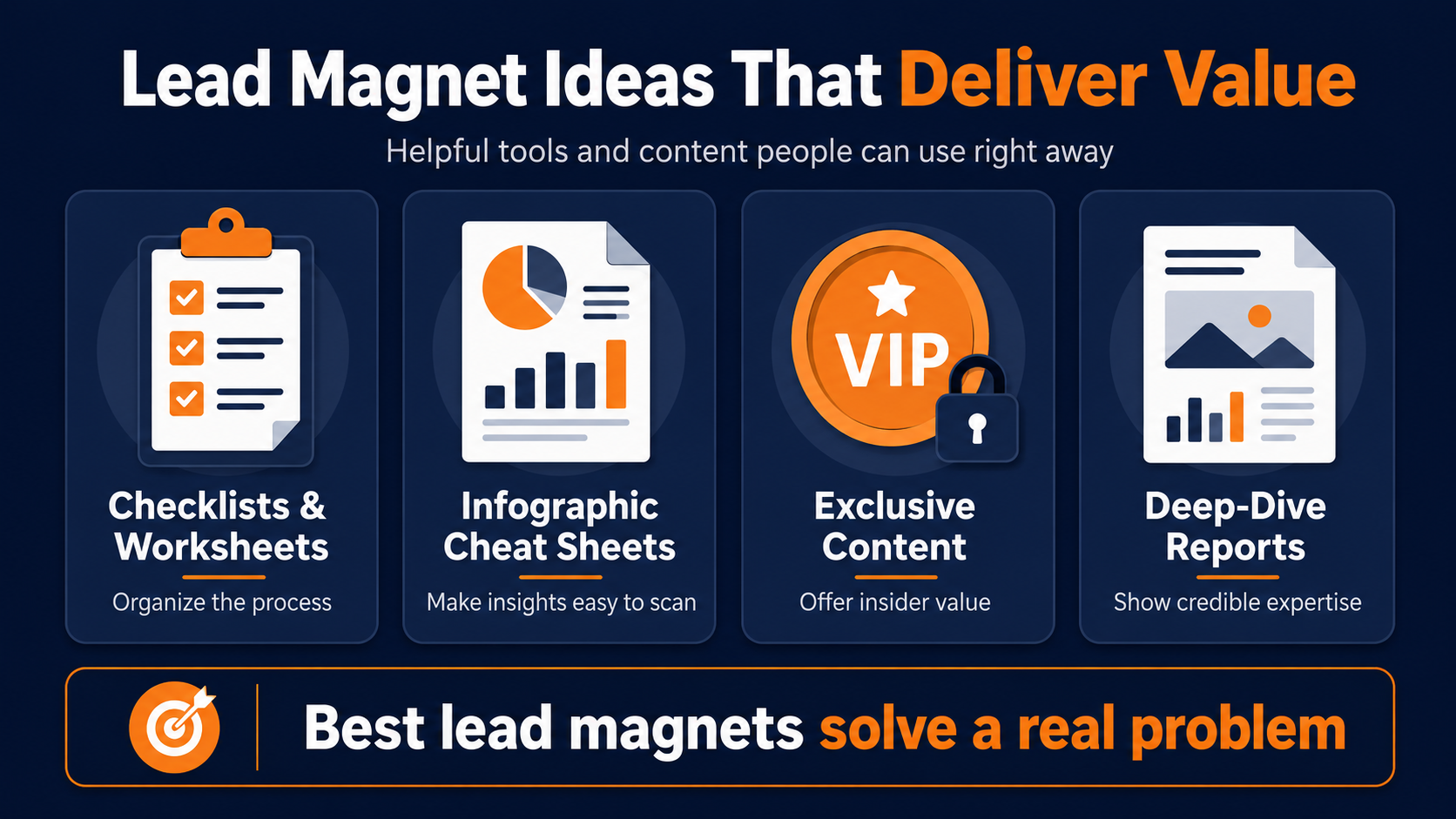
Everybody is short on time, so any tool that helps with time management gets a warm welcome. Checklists and worksheets do exactly that, organizing the steps of a process, project, or decision so the work actually gets done.
Like with e-courses, these work best when your title describes the problem they solve rather than what they are. An action-oriented title draws the eye that a lead magnet needs. There's a bonus, too. You can design a checklist that also organizes the information your team will need later if that person becomes a customer, which saves time during onboarding and gets you to the impressive part faster.
Pro Tip: Title every checklist, template, or report by the problem it solves, not by what it is. “The 12-point deliverability audit” beats “Our email checklist” every time.
Infographic cheat sheets
Producing an infographic may take skills and tools beyond what you use for a newsletter, and the payoff can be worth it. Visual information is processed fast and shared often, and a strong infographic that answers an important question can pull subscribers better than the same content in plain text.
The move here is to tease one portion of the infographic in your promotion, then tell people they get the full version when they sign up. Make sure the finished piece actually delivers on the preview, because a cheat sheet that oversells and underdelivers does more damage than no offer at all.
Exclusive content with more to come
People love feeling like they're part of the in crowd. This lead magnet comes in two parts. The first is the ongoing promise of exclusive content delivered through your newsletter. This could be things like behind-the-scenes looks, member-only offers, or early access to products before public release.
The second part is the specific giveaway someone gets the moment they sign up. This shouldn't be a quick preview but a real inside look at your company. A manifesto works well here. Think about the most transparent, revealing thing you can share that would make a prospect want to engage more deeply with your brand and what it stands for.
Deep-dive reports
A deep-dive report is what it sounds like, a detailed study of some aspect of your business or industry. This can't be a 101-level ebook. It has to be a comprehensive, expert assessment of something happening in your field, answering a narrower question than broader content would.
This is often one of the stronger options for a B2B audience specifically. Business buyers usually arrive already knowing the basics. What they want is a detailed, credible answer to a specific problem, and a report that delivers that positions you as the expert worth hearing more from.
Trust-Building And Tangible Lead Magnet Ideas
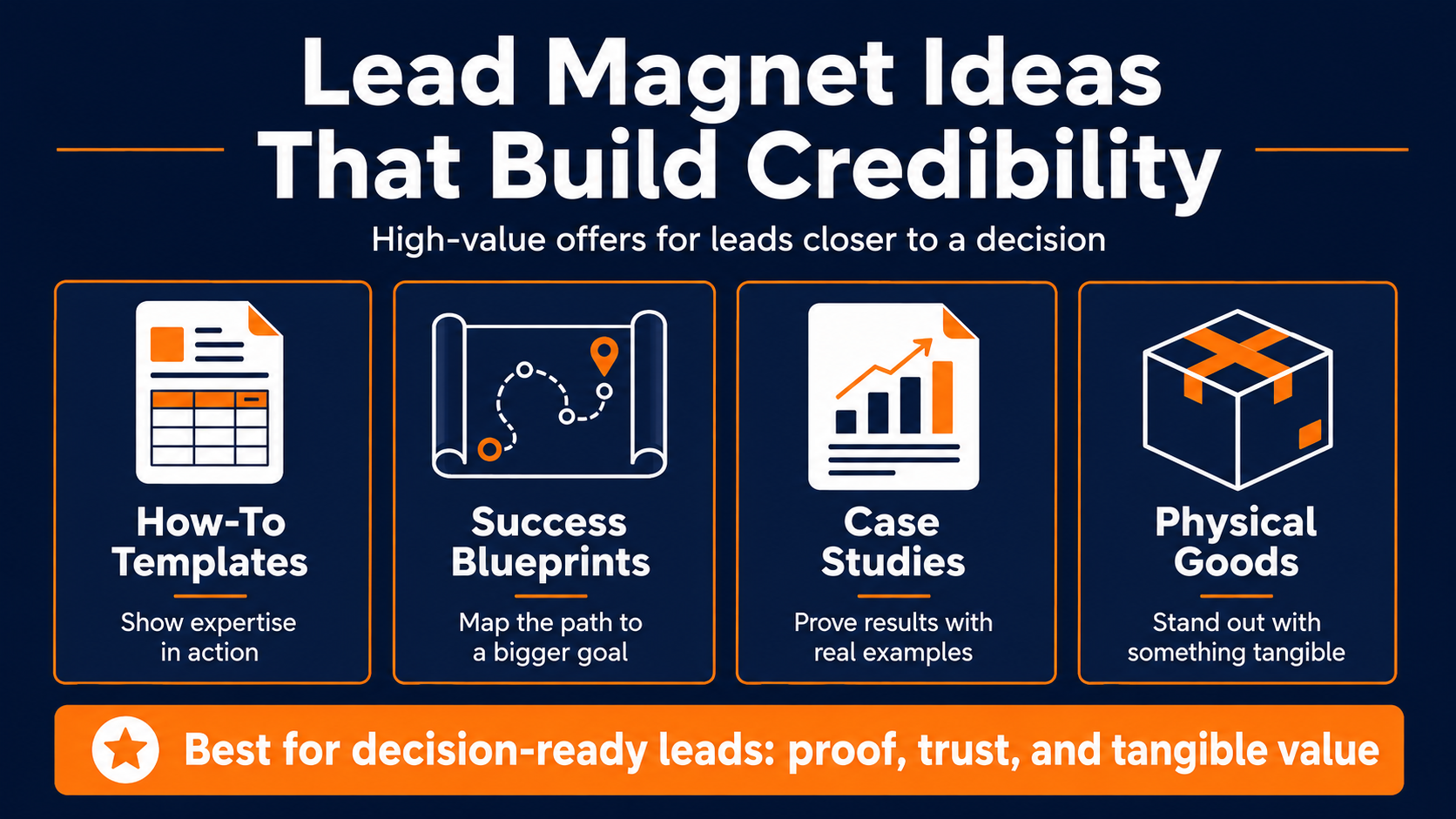
The last group of lead magnet ideas leans on proof and, in one case, on something physical showing up at the door. These tend to convert the people closest to a decision, because they trade in credibility rather than curiosity.
How-to templates
This cousin of the checklist solves the same kind of problem in a slightly different form. It gives the reader clear, organized, detailed instructions for accomplishing a task, and in doing so it shows how skilled you are at that task.
Offer a template for something you'd normally charge to do. It builds gratitude, because you saved the person money, and trust, because they can see your expertise in action rather than just hearing you claim it.
Success blueprints
The difference between a success blueprint and a how-to template is scope. A template walks someone through a single task they can finish on their own. A blueprint lays out a strategic, longer-term path toward a bigger goal, where each step might merit a how-to template of its own.
Design the blueprint so some steps are things people can do alone, some lean on your free content, and some point toward the paid help they'll need to finish well. You probably have a rough version of this already. It may be sitting in a drawer under a name like “customer journey template,” and there's no reason you can't turn the process you already use into a blueprint.
Case studies
People love stories, so tell them one. A case study showcases a specific example where you improved a client's situation dramatically. In many ways it's the grown-up version of a customer testimonial, showing the direct results of your work backed by real names and verifiable numbers.
Done well, it's a compelling mix of social proof and hard evidence that you're good at what you do. And it pulls double duty, working as a lead magnet and as sales proof for anyone already circling a buying decision.
Physical goods
Almost every signup offer is electronic, which is exactly why a real object arriving at someone's door stands out. If you can mail something tangible for free, your offer gets more attention than one more PDF.
Run the numbers first. Check your average sale value, average lifetime client value, and close rate per lead, then work out what you can afford to give away, shipping included, for less than that.
You've probably seen the version of this on social ads where someone offers a “free” print book for the cost of shipping, with that fee covering production and keeping the per-unit cost low.
Where Most Lead Magnet Ideas Leak Conversions
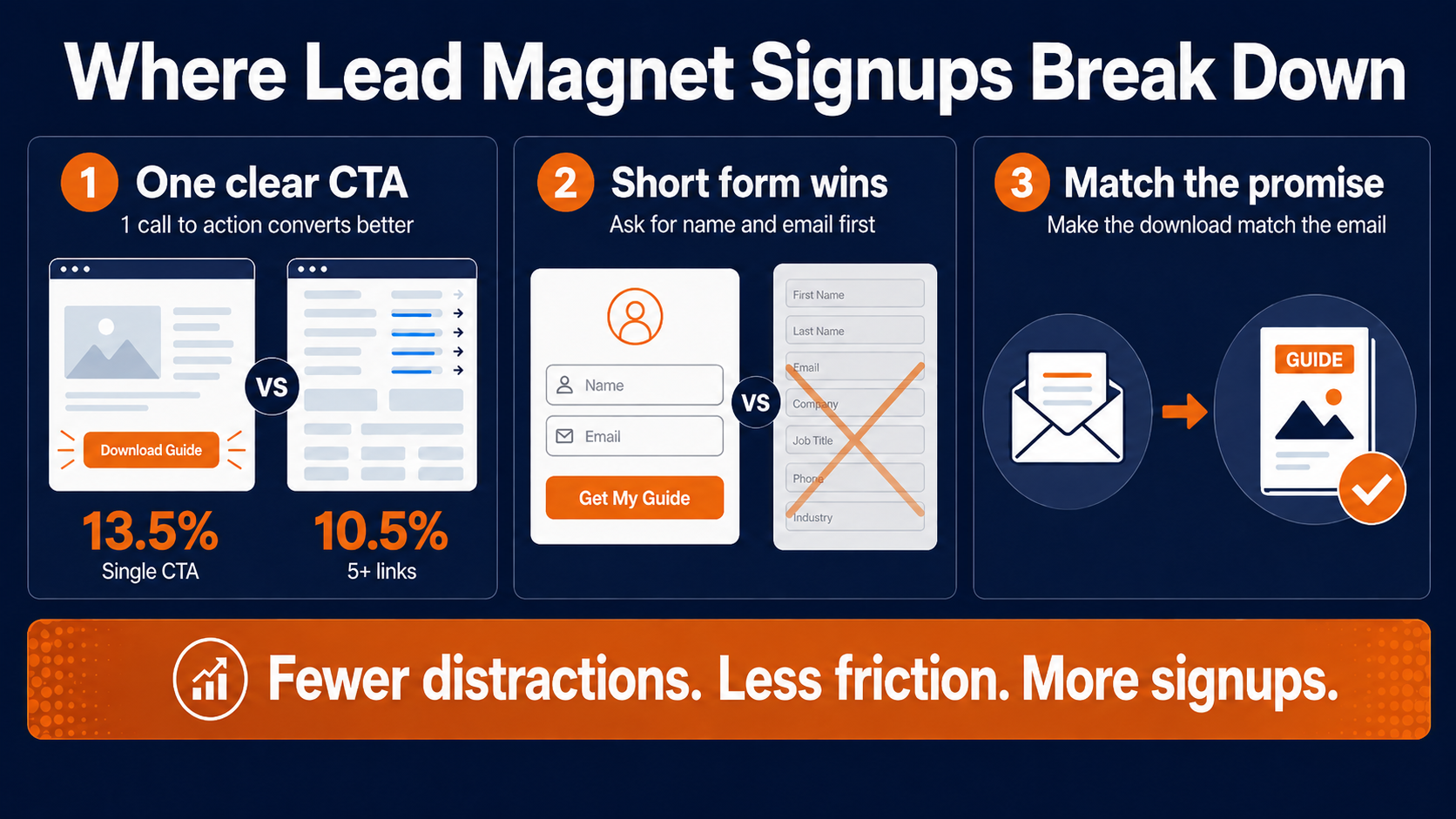
You can build a fantastic offer from any format above and still lose most of the people who wanted it, because the mechanics between “interested” and “subscribed” break down. This is where a gated content offer earns or loses its keep, in the few steps between the click and the confirmed signup.
The landing page is the first leak. When a page asks visitors to do one thing, it converts far better than a page pulling attention in five directions. Landing pages built around a single call to action convert at about 13.5 percent, compared to roughly 10.5 percent for pages carrying five or more competing links. Every extra button, menu item, and “while you're here” offer is a small tax on the one action you actually want.
Strip the page down to one job
Take a hard look at your signup page and count the things a visitor could click. A navigation menu that lets them wander off. A second offer competing with the first. Three social icons. Each one is an exit.
The landing pages that convert best feel almost too simple. A headline that states the value, a line or two on what's inside, a preview image, one form, one button. Nothing that invites the visitor to do anything except the single thing you brought them there to do.
Cut your form down to what you'll use
The signup form is the second leak, and the one people botch most often. Every field beyond name and email costs you completed signups. Job title, company size, phone number, all of it adds friction, and friction is where interested people give up.
Ask for the minimum at the top of the funnel. If you really need more to segment your follow-up, collect it later, once the person is already on your list and already warm. You can always ask a warm lead for one more detail. You rarely get a cold one back.
Match the promotional email to what's inside
The third leak is a mismatch between what you promised and what shows up. If your email teases a comprehensive playbook and the download turns out to be two pages, you didn't just lose a conversion. You burned trust with someone you'd already won over.
Your promo email is a trailer, not the movie. Give away enough that the download feels obvious, describe exactly what's inside, and make sure the thing behind the gate delivers on the tease. A trailer that oversells the movie doesn't just disappoint. It teaches people to ignore your next one.
Poor Follow-Up Kills More Lists Than Any Bad Offer
Say you get all of that right. The offer is excellent, the page is clean, the form is short, and the signups roll in. There's still one issue that stops email list growth more than any weak lead magnet ever will.
It's the silence after the signup.
Someone downloads your guide on a Tuesday. They're as interested in your topic as they will ever be, right at that moment. And then they wait. Three days pass while someone on your team gets around to writing a follow-up. By the time an email goes out, the person barely remembers signing up, and the moment is gone.
The first email is your highest-engagement moment
There's hard evidence for why that silence is so expensive. Welcome emails average an 83.63 percent open rate, the highest of any email type. Nothing else you send will ever be opened that reliably. The person just raised their hand, they know exactly who you are, and their attention is yours for a short window.
Waste that window on silence, or on a generic “thanks for subscribing,” and you've spent your single best moment of engagement on nothing. The first email after a signup is the most valuable one you'll send that person all year. Treat it like it.
Not every lead deserves the same next email
A person who took your seven-day e-course, a person who grabbed a one-page checklist, and a person who entered a giveaway are not the same lead. Treating them identically is one of the fastest ways to waste a list you worked hard to build.
The course-taker has invested real time and is close to a real conversation. The checklist-grabber is researching. The giveaway entrant barely knows you yet. Each one needs a different first email, and the lead nurturing that follows should reflect which format brought them in.
Which lead magnet fits which funnel stage
It helps to see how the formats above line up against where a lead actually sits in your funnel, because that mapping should shape the follow-up each one gets.
|
Lead magnet |
Funnel stage |
Follow-up it needs |
|---|---|---|
|
E-course |
Mid-funnel, education-ready |
A direct next step, they're already invested |
|
Deep-dive report |
Top-to-mid, research phase |
Related resources, keep teaching before you pitch |
|
Checklist or template |
Top-to-mid, quick-win seeker |
A nudge toward the next problem they'll hit |
|
Contest or giveaway |
Top-of-funnel, awareness |
An introduction, build the relationship first |
Run the same generic welcome across all four rows, and you flatten exactly the differences that make each source worth capturing in the first place.
Let the metrics pick your winners
Not every format on this list fits every industry, and you don't have to guess which ones do. Metrics are your friend here. Run the same email initiative with different offers and track which ones actually drive signups.
This kind of A/B testing is fast and happens in real time on most email platforms, which means you can stop spending time and budget on offers that don't convert and double down on the ones that do. The twelve ideas above are a starting menu, not a mandate. Your list will tell you which few are worth keeping.
Turn A Growing List Into A Growing Pipeline
Most teams pour effort into the next lead magnet while the leads from the last three sit in a spreadsheet with no sequence behind them. You already have the offers. What's missing is something that acts on a signup the moment it happens, before the seventy-two hours of silence set in and the interest disappears.
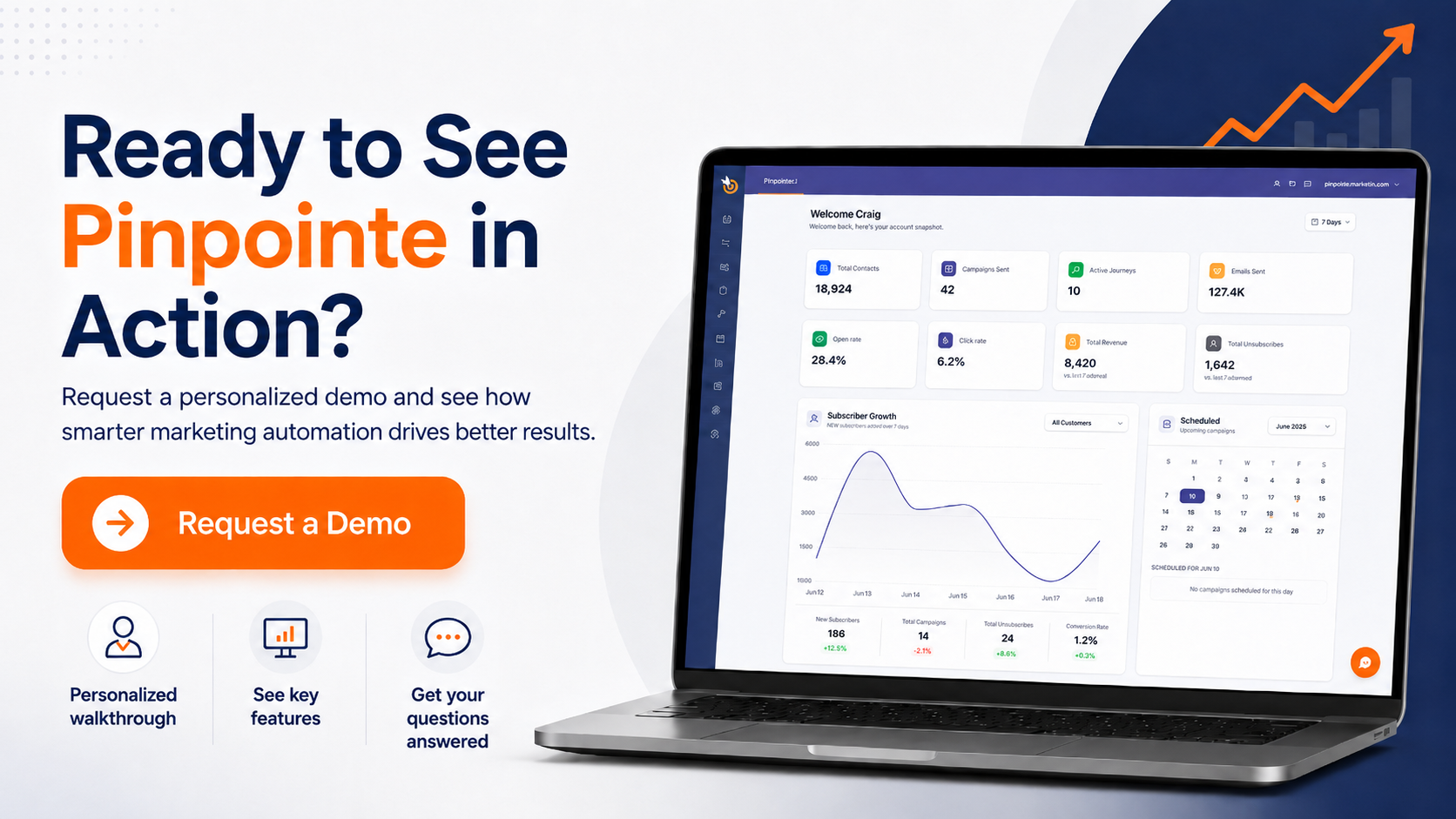
With Pinpointe, the moment someone signs up, a follow-up referencing that specific offer can fire while the topic is fresh, and each format lands in its own sequence instead of one flat welcome. Because email and SMS run from the same platform, a lead who goes quiet can get a short text nudge instead of another skipped email.
Most revenue leaks right after signup. Request a demo with our team and let us help you put your lead follow-up on autopilot and to stop the leaks that are killing your email list growth!